Additive manufacturing builds bridges between Sweden and India
When researcher Lars-Erik Rännar from Sports Tech Research Centre travelled to India at the end of February, it wasn't just about presenting research. The trip was also an opportunity to build relationships, exchange knowledge, and lay the foundation for future collaborations in additive manufacturing.
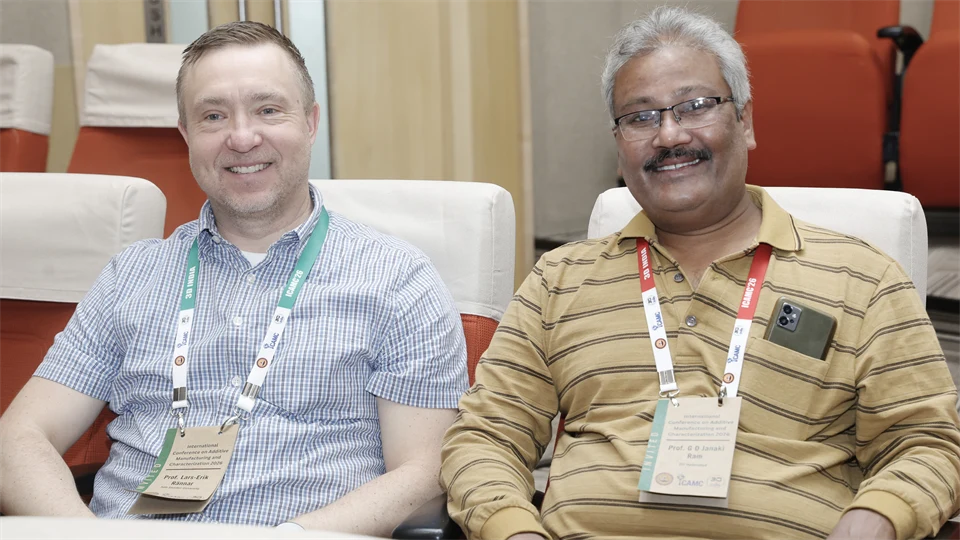
During his visit, he travelled to the cities of Chennai and Hyderabad, home to two of the country's most prestigious technical universities, IIT Madras and IIT Hyderabad. At his first stop, Chennai, he participated in the ICAMC 2026 research conference.
“I had the opportunity to present our latest research in additive manufacturing and electron beam melting, not least the attempts we are making to develop process parameters for the material tungsten so that it can be melted in a good way. The response was good and I received many questions about our project”, says Lars-Erik Rännar.
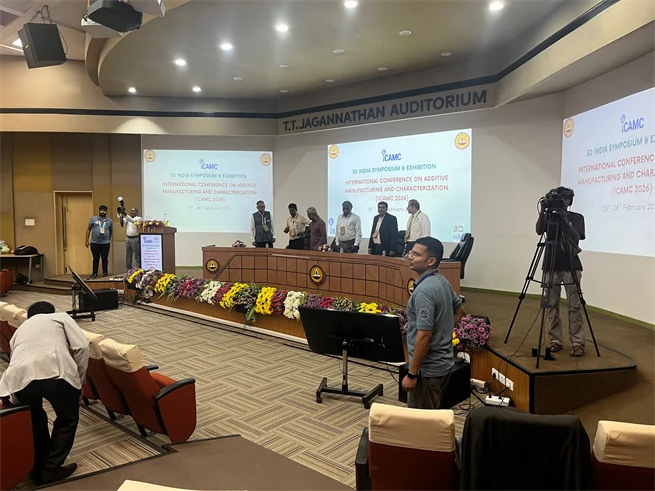
The ICAMC 2026 research conference in Chennai, southern India.
Tungsten is a material that is of great interest in advanced industry but is also difficult to work with.
”Tungsten has the highest melting temperature of all metals. This makes the material very challenging to use in additive manufacturing.”
Several research groups around the world are working on the issue, but the method used at the Sports Tech Research Centre may offer certain advantages.
”Other conventional techniques are limited, among other things, by the fact that the material can crack. Many projects in additive methods also use a much more expensive metal powder.
With electron beam melting, we can work more cost-effectively with powders that other techniques have difficulty handling, which could lead to new commercially viable markets”, says Lars-Erik Rännar.
New opportunities for research exchange
After the conference, the trip continued to IIT Hyderabad. There, Lars-Erik Rännar gave a guest lecture for researchers, doctoral and master's students. He also had the opportunity to visit labs and discuss future collaborations.
Contact with the university had already been established before the trip through Professor Janaki Ram, who had opened his eyes to the research at the Sports Tech Research Centre.
”They have recently invested in equipment for electron beam melting. Professor Janaki Ram and his colleagues want to learn more about the area, where our research group has unique cutting-edge expertise, says Lars-Erik Rännar.”
At the same time, there is knowledge in Hyderabad that can complement the research at Mid Sweden University.
”They are very strong in materials characterization, i.e. how to analyse and examine materials. We can learn a lot from them there.”
The opportunity to combine different research strengths is something Lars-Erik Rännar sees as crucial in the future.
”India is making enormous investments, both from the government and within industry. The ambition is to become a world leader in several technical areas. There is definitely potential for joint projects and perhaps also guest researchers coming to us in the future.”
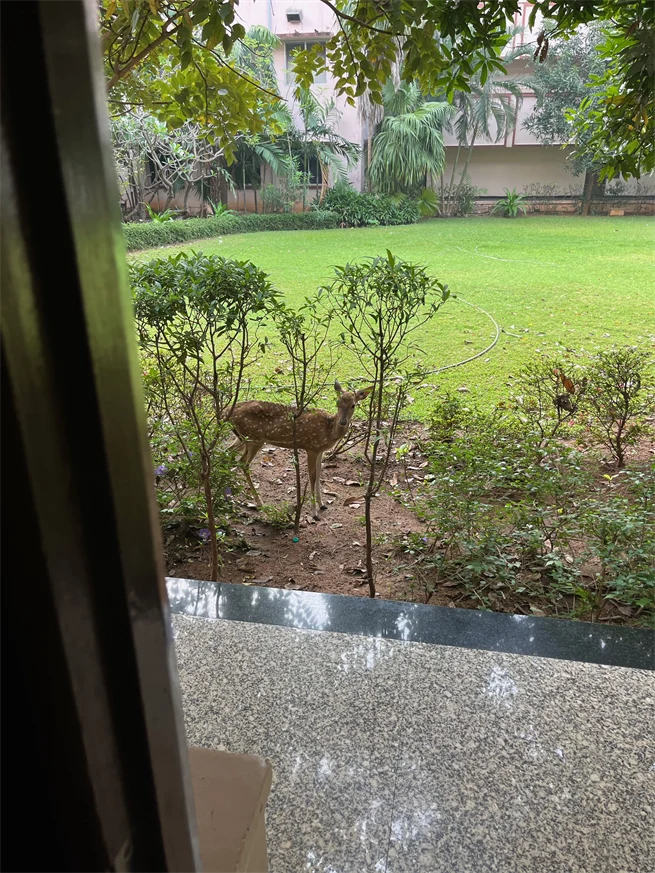
The campus at IIT Madras extends over a large area – it takes half an hour to drive across the campus. Campus life also consists of wild animals.
The trip is part of Mid Sweden University's investment in internationalisation and builds on contacts established with Indian universities in recent years, but for Lars-Erik Rännar the exchange is not just about research.
”I think it is rewarding and important to gain more experience from other cultures, not least when we receive doctoral students from other parts of the world. The hospitality is also absolutely fantastic – I have become a real India fan!”
Read more about the ongoing research projects in additive manufacturing at the Sports Tech Research Centre:
AM‑REACH – Recruitment for research and development in metal additive manufacturing
AM4Life – Additive manufacturing for advanced materials and future applications
EB‑FEA – Additive manufacturing of tungsten for future fusion energy within IRS TransTech