Peak Performance Takes Product Testing to the Wind Tunnel
During two intensive days, Peak Performance conducted product testing in the wind tunnel at Sports Tech Research Centre. Garments were evaluated in controlled winter and rain conditions, combining user experience with measurable data to advance the development of high-performance outdoor clothing.
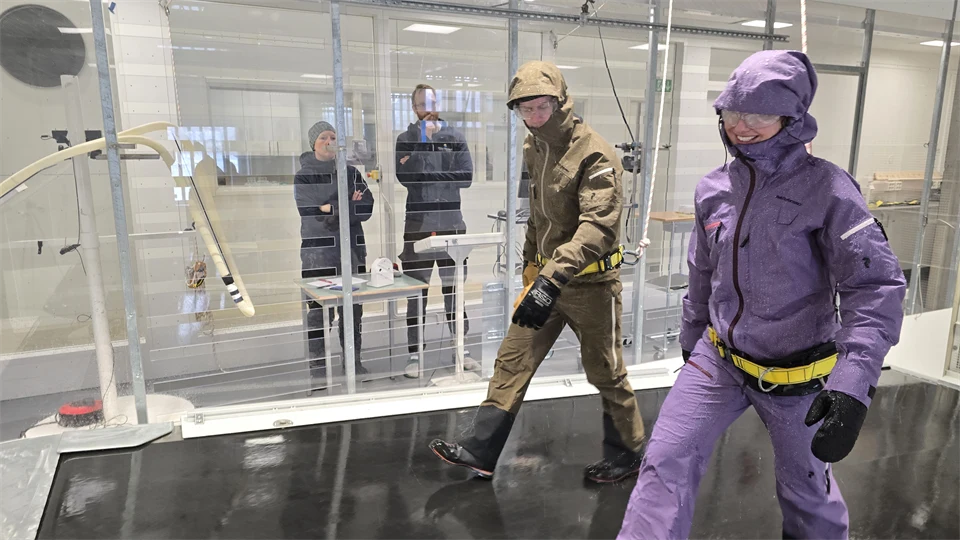
There was plenty of activity in the wind tunnel as Julia Zinnecker, Head of R&D at Peak Performance, gathered colleagues from several parts of the company. In addition to R&D, team members from product development, materials, and design also participated.
“It’s quite a large group here, and it’s a popular project to work on together. It’s truly cross-functional when several departments collaborate.”
A total of twelve products were tested over three sessions. At times, the wind tunnel was filled with test participants exposed to either biting cold or persistent rain.
On the first day, the lab doors were opened to let in the natural winter cold from outside, creating sub-zero temperatures in the test environment. The second day focused on wet conditions, using the wind tunnel’s rain generator to examine how the garments withstood sustained rain combined with wind.
“Together, we’re investigating construction, waterproofness, and wind protection, and how we can improve products based on those parameters,” says Julia Zinnecker.
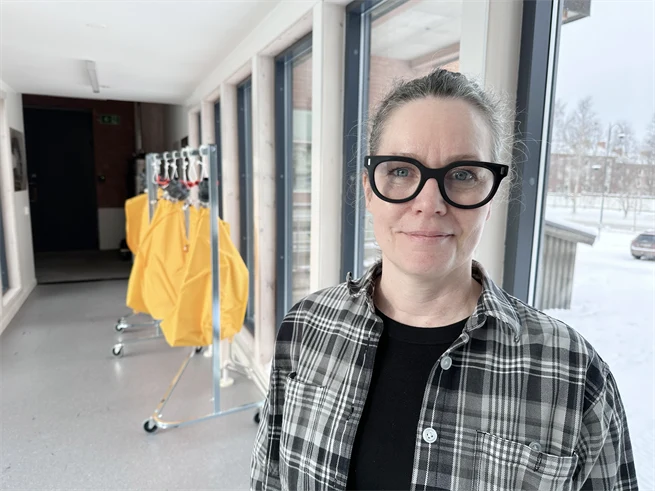
Julia Zinnecker, head of R&D at Peak Performance.
What makes the tests particularly valuable is the ability to combine subjective experiences with precise measurement points.
“Previously, we’ve been limited to field testing, where we can predict, but can’t control the conditions. Here, we can combine user-experience testing with measurement data in a controlled environment. This is the first time we’ve had that opportunity,” she explains.
Research collaboration opened the door
The collaboration with the Sports Tech Research Centre developed through the research project Sustainable Textiles, which is led by researcher Judith Waller and is part of the larger project H3 – Multidimensional Sustainability.
When the project began, Peak Performance became a partner and started contributing products. At the same time, the idea emerged to conduct their own tests in the wind tunnel to add another layer to their testing programs.
“One of my colleagues, Micke, was already familiar with the research centre. Last year, when we were on a team activity in Åre, my colleagues Aspar and Lina and I decided to come here and take a look at the wind tunnel. It quickly became clear that this could be relevant for our product development, so we decided to set up a test project, says Julia Zinnecker.”
It has been a very inspiring and appreciated experience, and for us it’s important to continue strengthening our collaboration with Mid Sweden University
The team from Peak Performance gained access to both the wind tunnel and guidance from research engineers Kajsa Nilsson and Magnus Ahnesjö at Sports Tech Research Centre.
“Kajsa and Magnus have been absolutely fantastic with their support, input, and commitment. They provide guidance and share their experiences and perspectives on what we’re doing. It has been a very inspiring and appreciated experience, and for us it’s important to continue strengthening our collaboration with Mid Sweden University.”
The results of the tests are now being further analysed, and there are strong indications that the wind tunnel could become a recurring part of the company’s product development work.
“We hope to see clear product development value from the results. At the same time, we’ve already learned a great deal through the process here in the lab,” concludes Julia Zinnecker.
Open Innovation as a driving force for sustainable development
The opportunity for companies and organisations to further develop and test ideas with a focus on sustainability at the Sports Tech Research Centre is offered through the Open Innovation project. The initiative is part of the larger research project H3 – Multidimensional Sustainability, which is funded by the Regional Development Fund and Östersund Municipality, and led by Mikael Bäckström, head of Sports Tech Research Centre.
“Through collaborative projects such as H3 – Multidimensional Sustainability, the Sports Tech Research Centre has collaborated with over eighty companies over the past six years”, says Mikael Bäckström.
The figures testify to a growing interest, and to a model where collaboration between business and research at Mid Sweden University contributes to the transition towards increased sustainability.