Smart 6G solution aims to prevent heat‑related rail deformation
The Ensure project is developing a 6G-based, energy-efficient monitoring system for remote railway sections in the Nordic region. Using AI-powered temperature sensing, dangerous rail buckling can be predicted in time, improving safety and operations in an increasingly warm climate.
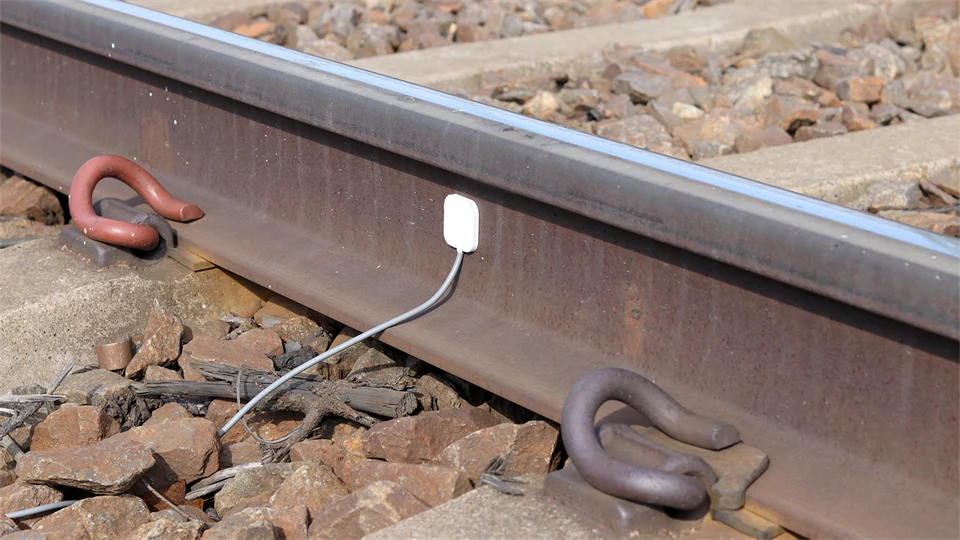
Nordic railways face growing challenges as the climate changes and temperature variations become more extreme. Within the interregional Ensure 6G project, researchers and industry partners are creating new solutions to enable robust digital connectivity and prevent heat-related rail issues.
This provides an early warning system that allows operators to act before dangerous situations arise
- Our goal is to provide reliable digital communication in areas that often lack stable networks, such as sparsely populated regions in Sweden, Finland and Norway, says Irida Shallari, researcher at STC and continues:
- These environments are challenging due to long distances, weak infrastructure and harsh weather.
One of the project’s most notable research tracks focuses on predicting and preventing rail buckling - deformations that occur when railway tracks expand under high temperatures. Several incidents were reported along the Malmbanan line during the summer of 2024, highlighting the need for improved monitoring.
- We have developed a contactless, AI-based method capable of predicting rail temperature before it reaches critical levels, Shallari explains.
- This provides an early warning system that allows operators to act before dangerous situations arise.
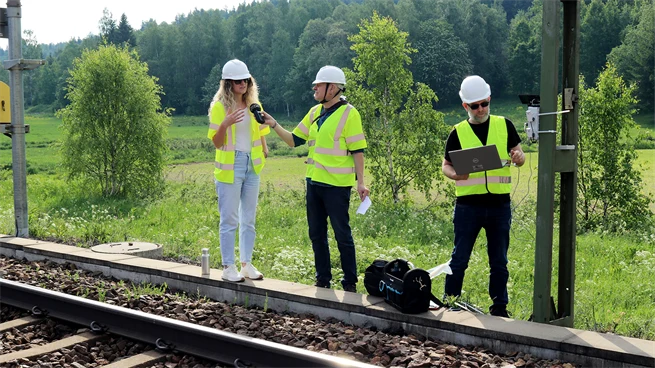
Christer Sunesson from Radio Sweden interviews Irida Shallri last year.
The solution requires no modifications to existing infrastructure. Instead, environmental data, such as air temperature and wind, is combined with measurements from a small iron reference platform. Through a soft-sensor approach, the system calculates rail temperature with high precision while keeping energy and communication demands low.
- We want the technology to function even in areas with limited connectivity. That’s why energy efficiency and simple implementation have been central design requirements, says Shallari.
The Ensure project is built on collaboration between academia and industry. Mid Sweden University, the University of Oulu and NTNU contribute expertise in 6G, communications and AI. Solita Oy and Starbit bring experience in IoT and AI solutions for real-world environments, while Bron Innovation supports regional implementation. The project is funded by Interreg Aurora.
Early results also show progress in several components of future 6G infrastructure, including semantic communication and distributed AI.
- Together, these components enable lightweight, intelligent systems that can increase railway safety, says Shallari.
- As heatwaves and extreme temperature fluctuations become more common, the need for such solutions will only grow.
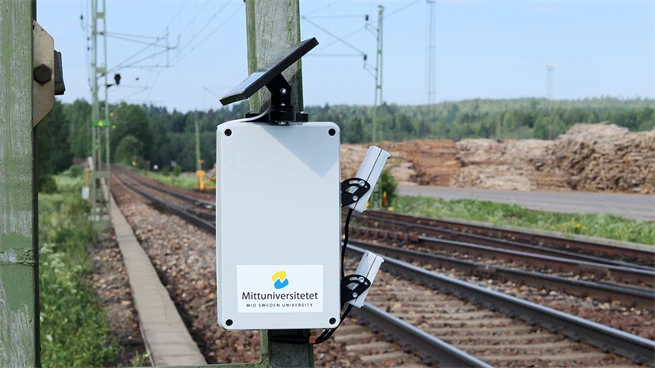
The smart cameras measures the temperature of the rails.
The technology is being developed for Scandinavian railway networks first, but the potential is global.
- Wherever railways are exposed to heat-related deformation, there is a need for better forecasting. Our ambition is to create a system that is easy to scale and capable of making a real difference for railway safety - both here and internationally, Shallari concludes.