From autonomous machines to intelligent bridge monitoring
As a new postdoc at STC Research Centre, Saira Latif is developing machine learning algorithms to monitor the structural condition of bridges. As part of the SHIELD-project, she is exploring how data from different sensors can be combined to detect anomalies and potential structural degradation.
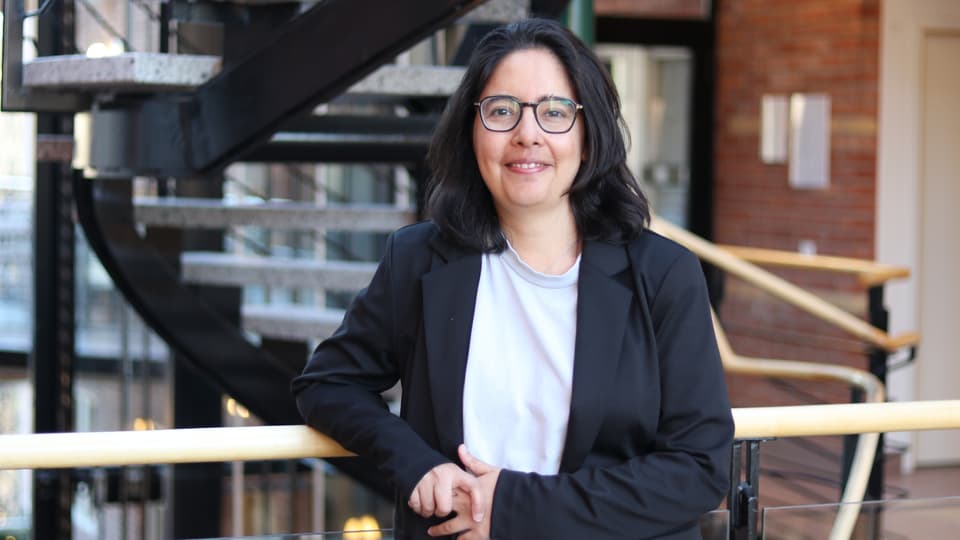
Making machines capable of navigating and making decisions independently has fascinated Saira Latif throughout her research career. From autonomous machines in forestry and agriculture to intelligent systems for monitoring bridges, her research has focused on developing technology that can analyze information and act with increasing levels of autonomy.
Saira recently joined STC Research Centre at Mid Sweden University as a postdoctoral researcher in the Autonomous Sensor System group led by Sebastian Bader. Her work is part of the SHIELD-project, where she focuses on developing methods for monitoring the structural health of bridges.
- Many bridges are approaching or have already reached the end of their estimated service life. We need intelligent solutions that can help us monitor their condition and identify potential problems avoid future hazards or disasters, says Saira.
Her research involves analyzing different types of data, including images, vibration measurements and strain signals. By combining information from different sensors, she aims to detect anomalies at an early stage and identify where potential structural degradation may be occurring.
Machine learning directly on the device
An important part of Saira’s work is to develop machine learning algorithms that require little energy and limited computational resources. She is investigating how information from different sensors can be processed and correlated directly on the device, without relying on continuous wireless data transmission or cloud computing.
- I am trying to build low-power, low-compute, on-device machine learning algorithms that can take information from different sensors and correlate this information to detect anomalies early and localize potential degradation, she explains.
A fascination with autonomous systems
Saira’s interest in technology began at an early age. During high school, she developed a particular fascination with Mathematics, Physics and Computers. She studied Electronic Engineering at COMSATS University and later did specialization in Robotics and Intelligent Machine Engineering from National University of Sciences and Technology (NUST) in Pakistan. During this period, she also worked as a lecturer in Electrical Engineering Department of COMSATS Islamabad, Pakistan.
While conducting her master’s research, she became increasingly interested in emerging autonomous technologies, particularly drones and self-driving cars. This interest eventually led her to pursue a PhD in Machine Design at Luleå University of Technology in Sweden, focusing on autonomous systems for forestry and agriculture.
- I was already interested in this research direction before starting my PhD. Agricultural and forestry environments are important to society but also challenging fields for automation. I was fascinated by the possibilities these systems could offer, says Saira.
Her doctoral research contributed to the development of what she describes as the world’s first full-scale autonomous forwarder. The machine was designed to navigate both agricultural and forest environments, identify objects such as large bales and logs, pick them up and transport them to a depot - all without human intervention.
- The idea of making machines able to navigate and make decisions independently still fascinates me. Seeing the full-scale autonomous system developed through the AORO-project working in a real environment was one of the most exciting moments in my research career, tells Saira.
A new research environment at STC
The opportunity to work with the SHIELD-project was an important reason for Saira to join Mid Sweden University. She was looking for a research environment where she could combine her previous expertise with new research challenges.
- I was particularly interested in the research project, and my interactions with Mid Sweden University further inspired me to join. I wanted to work in a collaborative, contemporary and positive environment where my research could align with my expertise, says Saira.
Poetry and time in nature
Outside research, Saira enjoys spending time in nature and connecting with friends and family. She also practices meditation, enjoys sports and reads books from different genres. There is another interest that might surprise her new colleagues - poetry.
- I like listening to, reading and writing poetry as well, she says.
About SHIELD
SHIELD is an international research project developing the autonomous systems of the future for real-time monitoring of bridge health. The project is funded with support from Vinnova and carried out in a collaboration between Mid Sweden University, IoT Bridge AB, FiberCheck and Chemnitx University of Technology.
Read more about the project: SHIELD (Structural Health Inspection with Embedded Low-Power Devices)