Using AI to better understand train delays
Research within the ENSURE 6G project is helping shed light on how weather conditions influence train punctuality. In his doctoral work, Vinicius Pozzobon Borin from Oulu University combines railway data and meteorological observations to develop AI models capable of predicting delays.
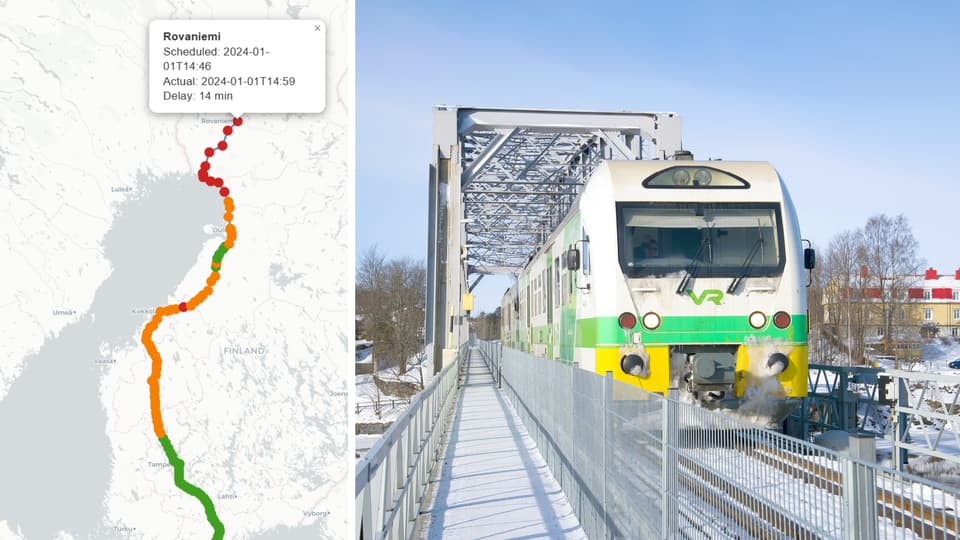
The study is based on eight years of open data from Finnish railway transport, merged with weather data from the Finnish Meteorological Institute. The dataset includes timetable information, actual delays, and detailed weather parameters such as wind speed and direction, humidity, air pressure, snow depth, and visibility.
- In my work I have developed an AI-model to predict train delays based on weather data and open data from the railway transportation, says Vinicius Pozzobon, PhD-student at University of Oulu.
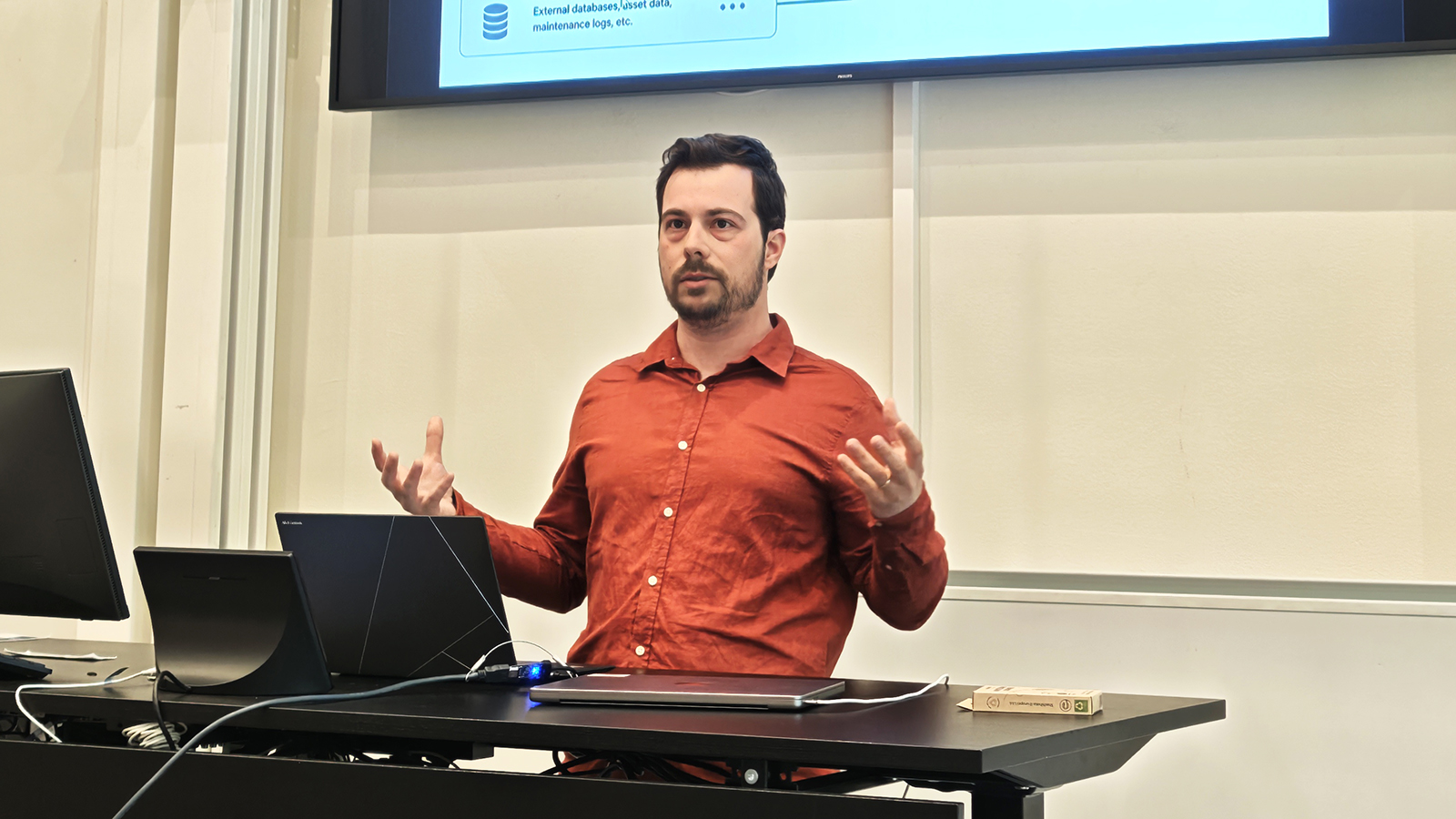
PhD-student Vinicius Pozzobon, presents his work on a project meeting at Mid Sweden University in Sundsvall.
To improve the model, additional variables such as seasonality, day of the week, and time of year were included, as these factors may also influence traffic patterns. The analysis shows increased delay patterns during winter months (December to February) and in June, potentially linked to harsh weather conditions and holiday travel periods.
Challenges of training AI on punctual trains
However, building a reliable model proved challenging. Finnish trains are highly punctual, and only around 10 percent of trains experience delays, typically short ones of 15-20 minutes.
- The challenge is that Finnish trains are often on time, and I didn’t have enough delayed data to use for the AI training, Vinicius explains.
Despite this, the developed AI model achieved a prediction accuracy of 77 %.
- The AI model that I developed got a 77 % prediction rate, but it can possible be improved by adding more data from different sources in the future, says Vinicius.
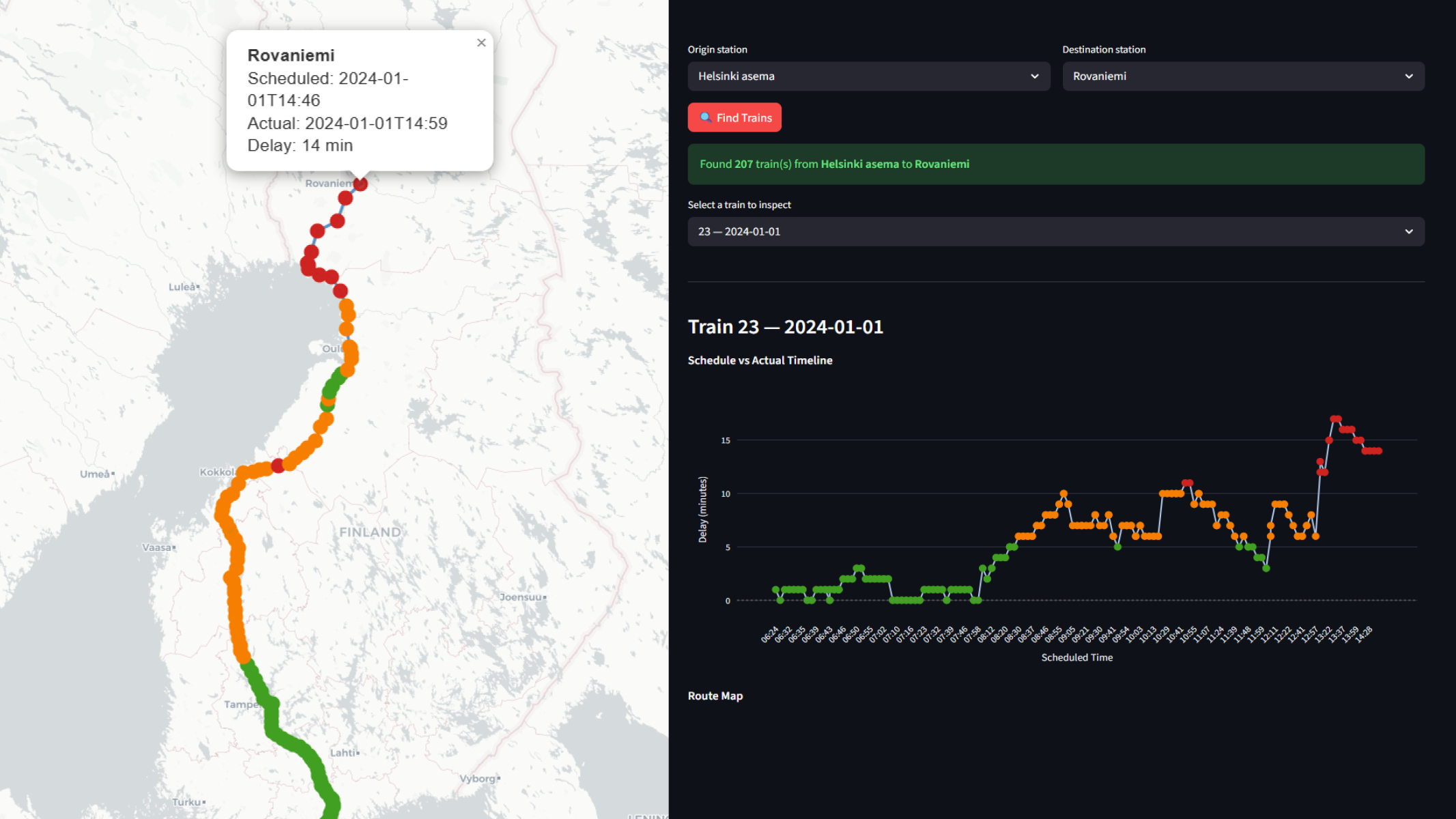
A map showing a stretch of railway through Finland. Green sections show that trains are on time, while orange and red indicate that trains are more often delayed on this stretch.
A significant part of the work involved cleaning and processing large-scale datasets spanning eight years.
- Eight years of data took hours and days to clean and sort even though I used a supercomputer, he notes.
Through the project, Vinicius has gained extensive experience in big data processing, remote computing, and evaluating different AI approaches to identify the most suitable model.
Could contribute to smarter railway maintenance
Looking ahead, the research may contribute to decision-support systems for railway maintenance, helping prioritize infrastructure repairs based on predicted risk of disruptions. In parallel to this, related work is exploring the use of image data from railway environments to monitor track conditions.
Vinicius work has been presented at a conference in Italy in June and published in a scientific journal. He will also present his work at the Lumo Art & Tech Festival in Oulu, Finland, in November.
This work is a part of the ENSURE 6G project funded with support from Interreg Aurora.
Read more about the project: ENSURE 6G - Remote sensing and data fusion integration for Industrial logistics in Rural Areas with 6G.
Read the pre-print of the journal paper: FI-TW: An Open Train-Weather Dataset for Railway Delay Analysis in Finland