AI and power electronics for the power grid of the future
Electrification places new demands on the electricity grids. In the Electrovation research project, Marcelo Burgos Zamora will develop solutions in areas such as AI, machine learning and power electronics to contribute to the energy system of the future in Västernorrland.
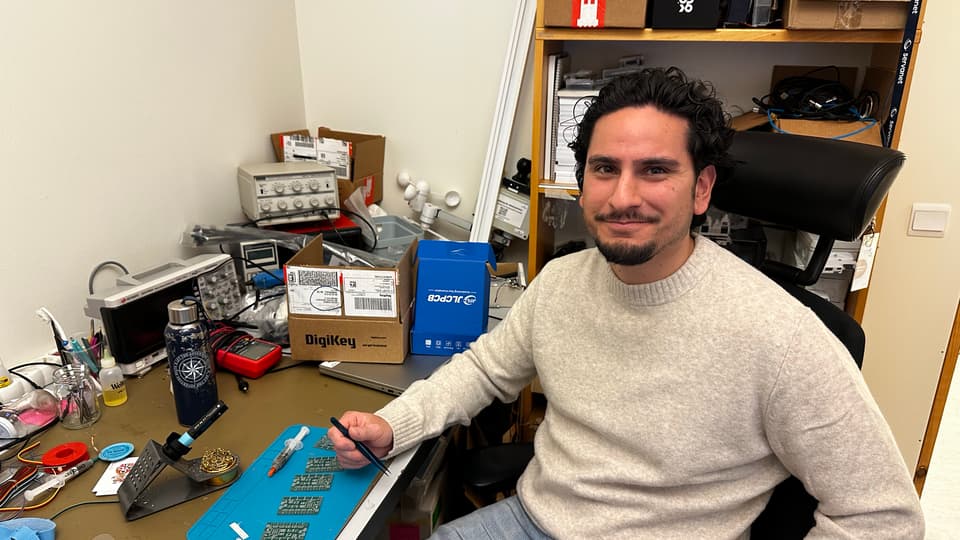
The electricity network industry is facing a comprehensive transition. Electrification is increasing at the same time as new technologies and areas of use place changed demands on the infrastructure that will deliver electricity. This creates a need for new ways of controlling and using the electricity networks more efficiently.
This is the starting point for Marcelo Burgos Zamora's research in Electrovation - a research and collaboration project at Mid Sweden University that will strengthen innovation capacity and increase electrification in Västernorrland. The project focuses on power shortages, energy storage, flexible electricity grids and energy-efficient processes, among other things.
"I hope to be able to contribute with new perspectives and solutions that in the long term can also have significance outside the individual research project
Marcelo has a background as a civil engineer in electrical engineering with a specialization in intelligent systems. During his education, he has worked with AI and machine learning linked to embedded systems, among other things. Now he combines that expertise with research in power grids and power electronics.
- The electricity network industry and the socially important infrastructure are undergoing a major transition, both nationally and globally. At the same time, electrification and technological development create great opportunities to develop new solutions. This is an area where I want to be involved and contribute, says Marcelo Burgos Zamora.
His research focuses on power electronics, AI and embedded systems. The goal is to develop technology that can help optimize infrastructure and systems in the distribution networks and create better conditions to meet a growing and changing electricity demand.
Through smarter control and optimization, the technology can help to manage limitations in today's electricity grid, and in this way research can create better conditions for continued electrification in the region.
- I hope to be able to contribute with new perspectives and solutions that in the long term can also have significance outside the individual research project. Research always involves humility in the face of not knowing in advance which ideas will make the biggest difference. At the same time, I am driven by the opportunity to contribute to an energy system that works better in the future.
An important part of Elektrovation is the link between research and the activities where the results can be used. The project is carried out in collaboration with actors in Västernorrland and focuses on the infrastructure that will support the region's continued energy transition.
For Marcelo, the regional connection was an important reason for applying for the project.
- Elektrovation attracted me because the research is conducted together with actors in my home region of Västernorrland and is about the infrastructure that supports the current and future energy transition. It feels particularly meaningful to be able to contribute to the development of the region where I have my own roots.
Through research close to the business community and the public sector, Elektrovation will contribute to new technical solutions and strengthen the region's innovation capacity. The hope is that in the long term, the results can also be used outside the activities participating in the project and contribute to a more flexible energy system.
More information
Elektrovation is funded by the Swedish Agency for Economic and Regional Growth and Region Västernorrland and is carried out in close collaboration between Energidalen Sollefteå, Sundsvall Elnät and Övik Energi, as well as in municipal collaboration with Sundsvall Municipality, Sollefteå Municipality and Örnsköldsvik Municipality.
Read more about Electrovation here