Alejandro explores future energy solutions for the Internet of Things
Alejandro Redondo Ayala is a PhD-student at the Polytechnic University of Madrid and is spending the autumn at Mid Sweden University. Here, he is working with Sebastian Bader’s research group to explore how energy harvested from the surrounding environment can be used to power connected sensors.
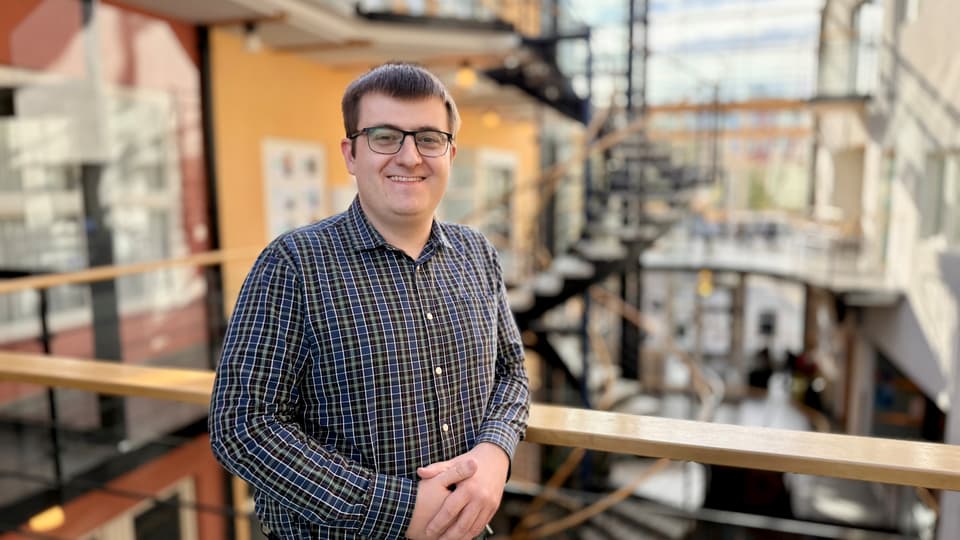
Alejandro Redondo Ayala arrived in Sundsvall at the end of July and will stay until the end of October. During his visit, he is working with Sebastian Bader’s research group, giving him the opportunity to test his research using energy harvesters developed by the group.
An energy harvester captures energy from the surrounding environment and converts it into usable energy, for example to power a wireless sensor.
- It is a great opportunity to test our power management system with a real energy harvester. Previously, we have simulated and replicated the characteristics of the harvester in our experiments. Now, we can test our system with the actual physical device in the lab here at Mid Sweden University, says Alejandro.
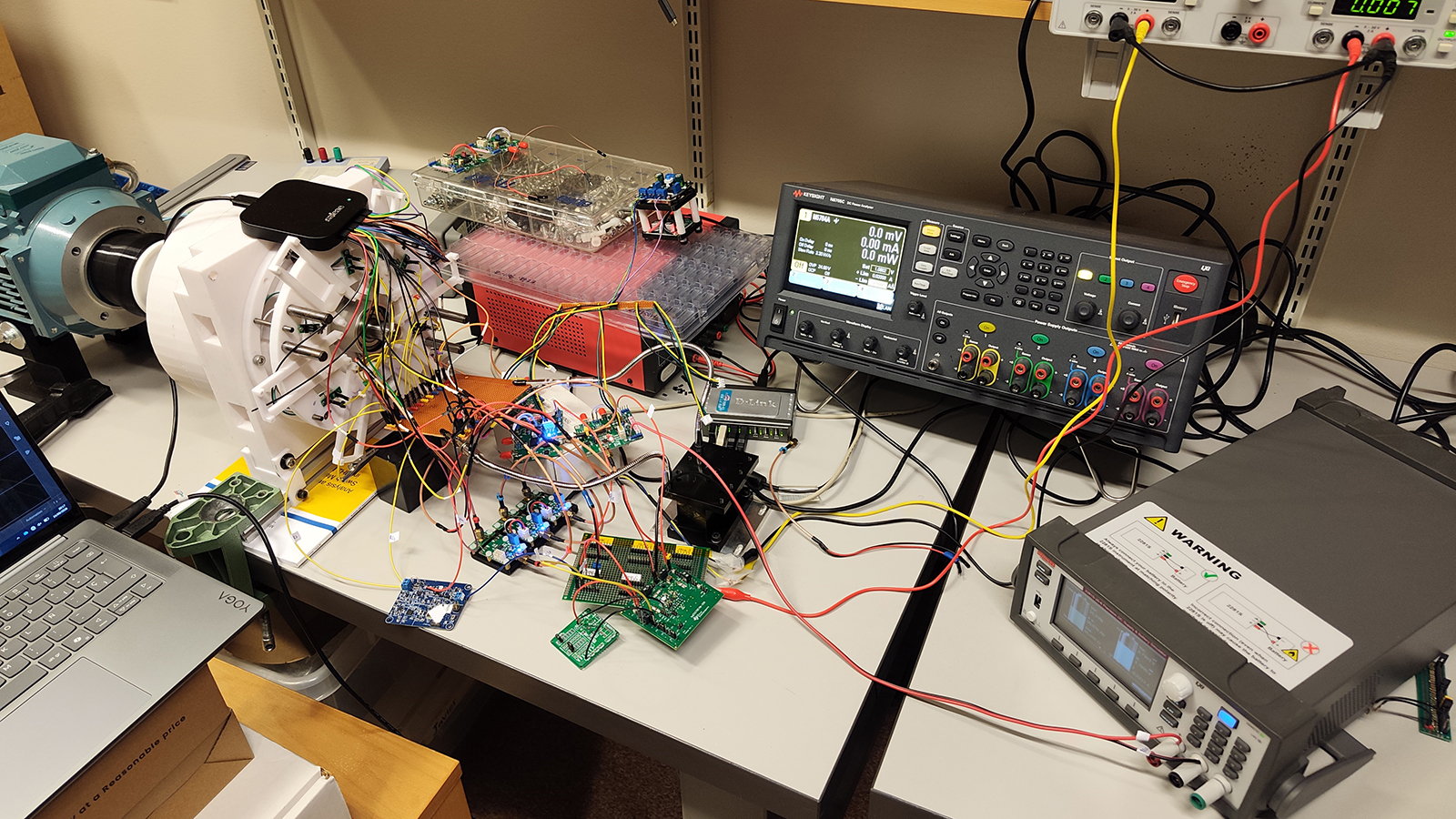
The energy harvesting setup that Alejandro been working on in the lab.
From harvested energy to a working sensor
Alejandro’s research focuses on how energy harvested from the surrounding environment can be managed and used as efficiently as possible in small, connected sensor systems.
An energy harvester can, for example, convert movement or vibrations into electrical energy. This energy can then be used to power sensors and other electronics. Potentially reducing the need for battery replacements or enabling completely self-powered systems.
In the research collaboration developed by Alejandro’s and Sebastian Bader’s groups, the focus is on two parts of the system. The STC research group works on harvesting energy from the surrounding environment, while Alejandro focuses on how the generated energy can be managed and converted so that it can be used efficiently by the system.
- We focus on how to manage the available energy. If a sensor, for example, needs to transmit a large amount of data, it consumes more energy. The system therefore needs to be able to adapt to how much energy is actually available, says Alejandro.
A collaboration that continues
Alejandro and Sebastian Bader first met through the European research project LoLiPoP-IoT, where researchers from UPM and Mid Sweden University and other partner organisations collaborated on energy solutions for connected systems. The collaboration resulted, among other things, in a joint conference publication. Although the project has now come to an end, the researchers are continuing to work together.
- I think both groups have found a good way of working together. We complement each other and have many ideas that we could develop further in the future, says Alejandro.
The researchers also hope that the collaboration can lead to new joint research projects.
Testing different solutions
During his stay in Sundsvall, Alejandro is experimentally comparing different approaches to managing the energy generated by the harvester. Among other things, he is comparing systems operating at different voltage levels and investigating how well commercially available power management devices perform when combined with the energy harvester used in the research.
The results could help determine which solutions are most effective, and whether existing commercial components are sufficient or whether new solutions specifically designed for energy harvesting applications will be needed in the future.
The aim is to use the results in further research and, if the findings are sufficiently promising, to develop a joint scientific publication.
An international research environment
For Alejandro, the visit is also an opportunity to gain experience of a new research environment. He is currently in his fourth year as a PhD student at UPM and has previously worked with areas including embedded systems, smart grids and energy harvesting for the Internet of Things.
This is the first time he has spent an extended period outside Spain.
- I think Sundsvall is a very nice city, and the people are warm and welcoming. There is also a very international and collaborative environment here at the research centre. It is interesting to meet researchers from different parts of the world and work on research related to the Internet of Things, says Alejandro.
When his stay in Sundsvall comes to an end, Alejandro will return to his PhD project. He is not yet sure what he would like to do after completing his degree, but he hopes to continue working in research.
- I would like to continue in research if I get the opportunity. It is very interesting to explore a field in depth, test different solutions and investigate things that are not yet commercially available, he says.