

BIAPER – Biathlon Performance
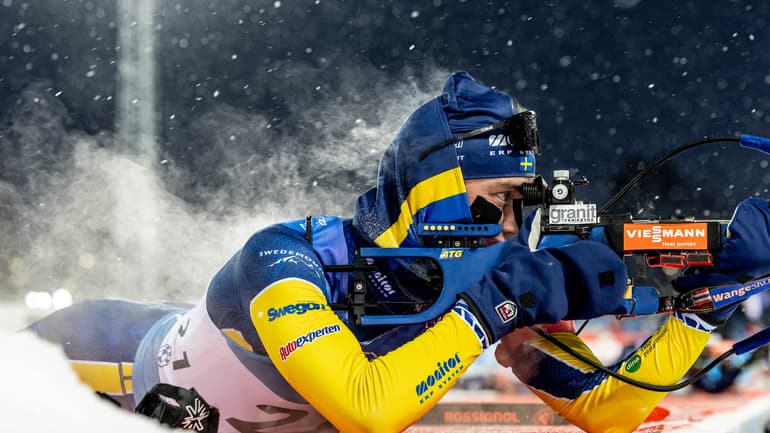
The BIAPER project aims to clarify how skiing speed and shooting performance affect the overall outcome in different competition formats, as well as whether and how they are linked to various...
The BIA-SKIP research group is an interdisciplinary environment that focuses on developing and implementing knowledge to optimize performance in biathlon.
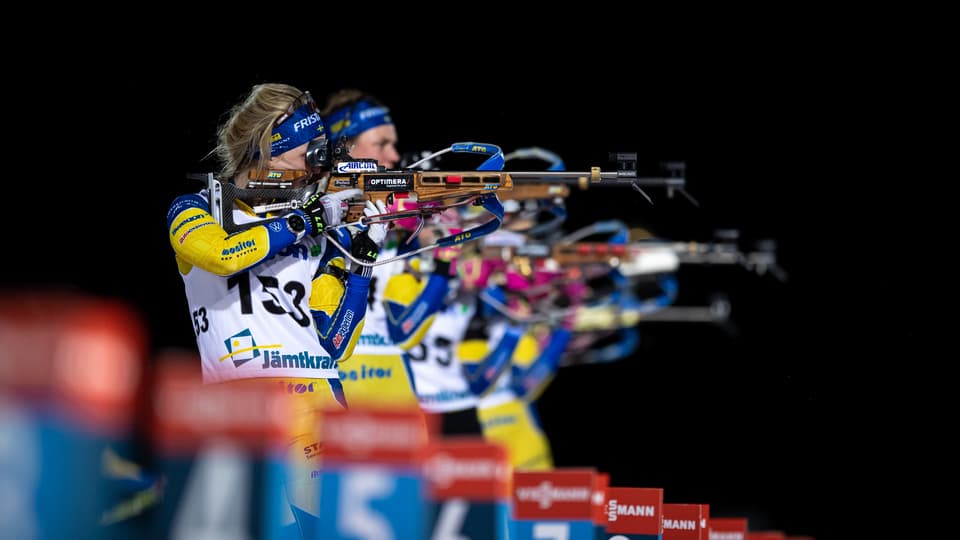
By combining expertise in physiology, biomechanics, behavioural science and advanced measurement methodology, we aim to generate new knowledge that can support both active biathletes, coaches and sports organisations. The group's ambition is to encompass the entire complexity of biathlon – from endurance load, shooting precision and tactical factors, to structural and psychological factors for training and performance. The goal is to strengthen knowledge development in biathlon and support its implementation in practice.
The research group collaborates closely with national federations, elite environments, international universities and other actors in winter sports.
BIA-SKIP is part of the Swedish Winter Sports Research Centre, NVC.
The research group has a clear sports-related profile and works primarily within the following three basic themes: the rifle's impact on skiing, performance analysis, and talent development.
The goal of the research area is to increase knowledge about how the rifle affects the athlete. This is to be able to develop the sport-specific training and in the long run get an improved performance. It is of great importance to understand the specific demands that sport places on the athlete in order to develop biathlon as a sport.
In performance analysis, we focus on understanding the most important performance factors in biathlon. The work is mainly linked to competition analysis, partly in combination with laboratory tests, to identify how variables such as skiing speed, pacing strategies, shooting accuracy, time on the shooting range and shooting time, as well as physiological capacity affect the results in different competition formats and at different performance levels. Overall, the research aims to develop evidence-based methods for performance analysis, follow-up and prediction to support athletes' development and optimize training in biathlon.
Within this research area, the focus is on new methods to measure training load, structures in different training environments, and training quality and efficiency. The studies investigate how these factors interact to promote long-term training and performance development. In order for a junior biathlete to develop both optimally and sustainably, knowledge of how to optimize the training load while strengthening the supporting structures around the athlete is required to give them the conditions needed for a long elite career.
Research has so far focused on active biathletes in biathlon high schools, but the goal is to also include post-secondary structures.
"How to ensure the regrowth of biathlon", clip from TV4, 24 March 2026 (in Swedish)
Jonsson Kårström, M. , Horvath, M. , Andersson, E. & Laaksonen, M. (2026). Effects of rifle carriage on performance, physiological responses, power output and external work in a simulated biathlon competition. European Journal of Applied Physiology,
Davis, P. A. , Åström, E. , McGawley, K. , Arnqvist, N. P. & Jonsson Kårström, M. (2026). Targeting time perception in biathlon : Examining physiological and perceptual responses to time pressure. Journal of Sports Sciences, vol. 44: 14, pp. 1812-1826.
Jonsson Kårström, M. , Ruiz-Navarro, J. J. , Romann, M. & Born, D. (2026). Thinking outside the box : comparing age at performance milestones of swimmers to cross-country skiers and biathletes. Journal of Science and Medicine in Sport, vol. 29: 8, pp. 897-902.
Staunton, C. A. , Kårström, A. , Kock, H. , Laaksonen, M. S. & Björklund, G. (2025). Kernel Density Estimation : a novel tool for visualising training intensity distribution in biathlon. Frontiers in Sports and Active Living, vol. 7
Laaksonen, M. S. & Björklund, G. (2025). Performance indicators in women’s and men’s biathlon relay. BMC Sports Science, Medicine and Rehabilitation, vol. 17: 1
Kock, H. , Wick, J. , Gronwald, T. , Laaksonen, M. & Hanstock, H. (2025). The Making of a Biathlete : Insights From 2 Decades of Training Data From Junior, World, and Olympic Champions. International Journal of Sports Physiology and Performance, vol. 20: 8, pp. 1135-1144.
Kårström, A. , Swarén, M. & Björklund, G. (2024). Discrepancies in internal and external training load measurements during low-intensity biathlon training. Frontiers in Sports and Active Living, vol. 6
Jonsson Kårström, M. (2024). Participation but not success in youth and junior World Championships is important for overall ranking in the biathlon World Cup during adult age. Frontiers in Sports and Active Living, vol. 6
Staunton, C. A. , Jonsson Kårström, M. , Björklund, G. & Laaksonen, M. S. (2024). Performance and Micro‑Pacing Strategies in Biathlon Skiing. Journal of Science in Sport and Exercise, vol. 6: 4, pp. 324-331.
Staunton, C. A. , Andersson, E. P. , Björklund, G. & Laaksonen, M. (2023). Heart Rate–Blood Lactate Profiling in World-Class Biathletes During Cross-Country Skiing : The Difference Between Laboratory and Field Tests. International Journal of Sports Physiology and Performance, vol. 18: 7, pp. 780-785.
Jonsson Kårström, M. , Stöggl, T. , Lund Ohlsson, M. , McGawley, K. & Laaksonen, M. S. (2023). Kinematical effects of rifle carriage on roller skiing in well-trained female and male biathletes. Scandinavian Journal of Medicine and Science in Sports, vol. 33: 4, pp. 444-454.
Kårström, A. , Laaksonen, M. & Björklund, G. (2023). School’s out for summer–Differences in training characteristics between adolescent biathletes of different performance levels. PLOS ONE, vol. 18: 8
Jonsson Kårström, M. , Staunton, C. A. , McGawley, K. , Björklund, G. & Laaksonen, M. (2022). Rifle carriage affects gear distribution during on-snow skiing in female and male biathletes. Journal of Sports Sciences, vol. 40: 24, pp. 2722-2731.
Björklund, G. , Dzhilkibaeva, N. , Gallagher, C. & Laaksonen, M. (2022). The balancing act between skiing and shooting – the determinants of success in biathlon pursuit and mass start events. Journal of Sports Sciences, vol. 40: 1, pp. 96-103.
Björklund, G. & Laaksonen, M. (2022). The Determinants of Performance in Biathlon World Cup Sprint and Individual Competitions. Frontiers in Sports and Active Living, vol. 4: March, pp. 1-9.
Staunton, C. A. , Sloof, L. , Brandts, M. , Jonsson Kårström, M. , Laaksonen, M. & Björklund, G. (2022). The Effect of Rifle Carriage on the Physiological and Accelerometer Responses During Biathlon Skiing. Frontiers in Sports and Active Living, vol. 4: March, pp. 1-15.
Jonsson Kårström, M. , McGawley, K. & Laaksonen, M. (2021). Effects of Additional Rifle-Carriage Training on Physiological Markers and Roller-Skiing Performance in Well-Trained Biathletes. Journal of Science in Sport and Exercise, vol. 3: 3, pp. 292-302.
Laaksonen, M. , Andersson, E. , Jonsson Kårström, M. , Lindblom, H. & McGawley, K. (2020). Laboratory-Based Factors Predicting Skiing Performance in Female and Male Biathletes. Frontiers in Sports and Active Living, vol. 2
Dzhilkibaeva, N. , Ahrens, M. & Laaksonen, M. (2019). Can performance in biathlon world cup be predicted by performance analysis of biathlon IBU cup?. International Journal of Performance Analysis in Sport, vol. 19: 5, pp. 856-865.
Jonsson Kårström, M. , McGawley, K. & Laaksonen, M. (2019). Physiological Responses to Rifle Carriage During Roller-Skiing in Elite Biathletes. Frontiers in Physiology, vol. 10
Laaksonen, M. , Finkenzeller, T. , Holmberg, H. & Sattlecker, G. (2018). The influence of physiobiomechanical parameters, technical aspects of shooting, and psychophysiological factors on biathlon performance: A review. Journal of Sport and Health Science, vol. 7: 4, pp. 394-404.
Laaksonen, M. , Jonsson, M. & Holmberg, H. (2018). The Olympic biathlon – Recent advances and perspectives after Pyeongchang. Frontiers in Physiology, vol. 9: JUL
The BIAPER project aims to clarify how skiing speed and shooting performance affect the overall outcome in different competition formats, as well as whether and how they are linked to various...
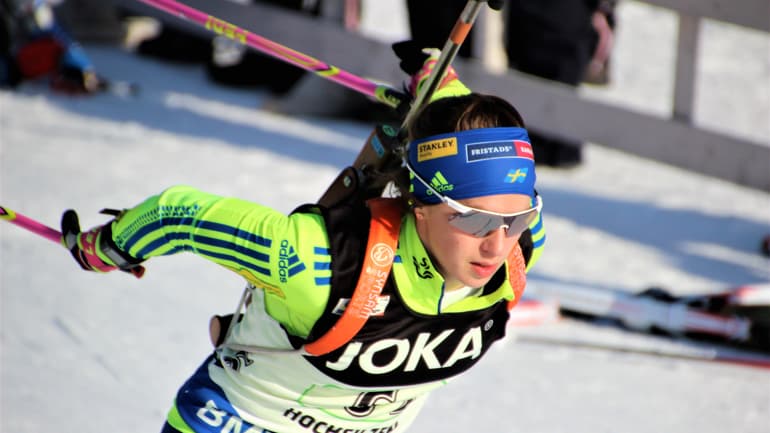
How does the rifle affect the biathlete and is it possible to develop the sport-specific training in order to perform better?

The page was updated 9/9/2026
Content owner:
Nationellt vintersportcentrum, NVC