International research exchange on AI in STEM education at Mid Sweden University
The Network for Subject Didactic Research in Mathematics and Science (NÄMN) at Mid Sweden University has recently had a visit from Professor Miguel Galiana Martínez from the Universidad Europea de Valencia in Spain.
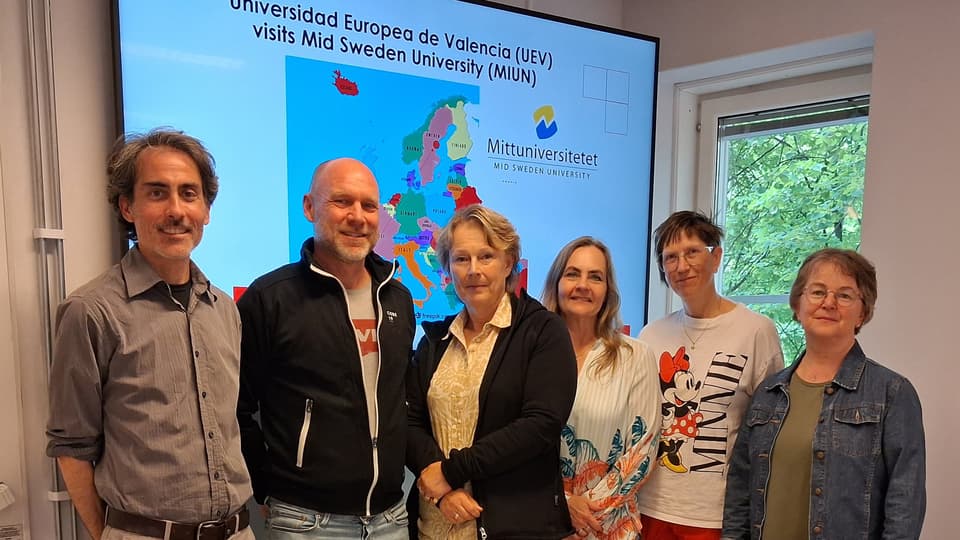
The visit was carried out within the framework of the European university alliance ChallengeEU, which includes Mid Sweden University and Universidad Europea de Valencia together with seven other European universities.
Miguel Galiana Martínez leads a multidisciplinary research group focusing on educational development and educational research. During his visit to Mid Sweden University, he held a seminar on artificial intelligence in STEM education (Science, Technology, Engineering and Mathematics), where he presented results from one of the research group's studies.
"First and foremost, we take with us that this is an international phenomenon. We are wrestling with similar questions regarding the development of teaching and forms of examination, so that the use of AI can contribute to learning," says Helena Johansson, associate professor at Mid Sweden University and contact person for NÄMN.
The experiences and research results presented during the seminar can contribute to the ongoing discussion on how AI can be used in a productive way in teaching. The seminar also provided concrete examples of subject integration in engineering education, which can inspire continued development of both education and research at Mid Sweden University.
Explore new collaborations
For the research group, participation in ChallengeEU provides valuable opportunities to develop international collaborations.
"It provides opportunities to explore new collaborations with research groups at the other universities within ChallengeEU. Common research questions can contribute with new perspectives on the same phenomenon," says Helena Johansson.
The visit has also created an increased understanding of each research group's activities and research interests.
"We have gained an insight into which areas they are active in and what research issues they are working on, and they have received the same information about us. Although we currently have no concrete plans, there are potential overlaps between our research areas that may be interesting to explore further," says Helena Johansson.
The visit is an example of how international collaborations within ChallengeEU can create new opportunities for knowledge exchange, joint research and development of the future of higher education.