From Idea to International Meeting Place for Research on Indigenous Issues
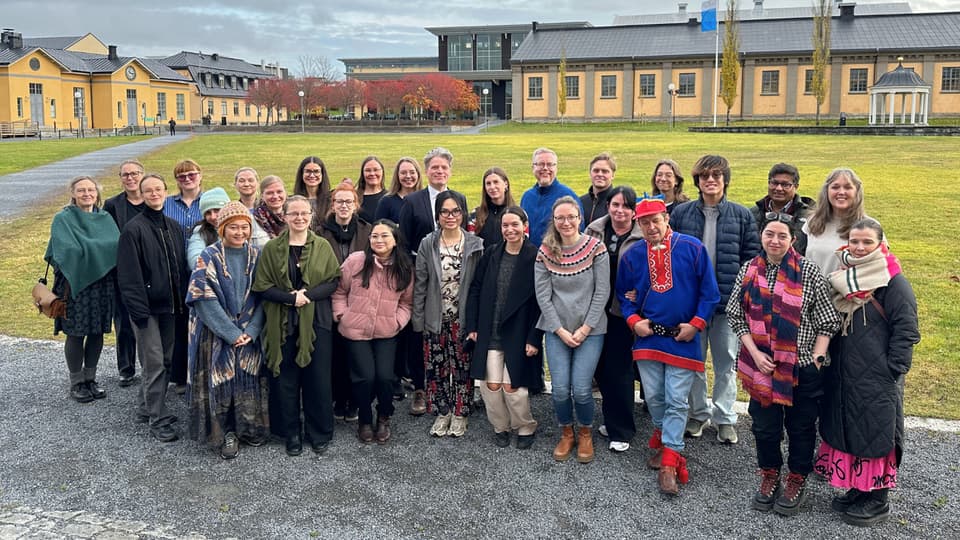
On 27–28 October, Symposium for Early Career Researchers Working with Indigenous Issues was arranged for the second time at Gaskeuniversiteete (Mid Sweden University) in Staare (Östersund). The initiative grew out of the need for more meeting places for researchers in indigenous issues.
As a doctoral student, Ekaterina Zmyvalova, now a postdoc in law at Mid Sweden University, felt privileged to have colleagues who worked with indigenous issues. At the same time, she wished for more opportunities to meet other researchers and discuss research in the field.
"Indigenous studies is a relatively small and interdisciplinary research area with researchers spread across different disciplines," says Ekaterina.
From his own experiences, the idea of a meeting place emerged. A forum where researchers at the beginning of their careers could share their research, exchange ideas, support each other, and make contacts that eventually lead to more collaborations.
In the autumn of 2025, the Symposium for Early Career Researchers Working with Indigenous Issues was arranged for the first time. On 27-28 October 2026, it was time again. For the second year, the symposium was arranged by the subject of law at Mid Sweden University, with Ekaterina as project manager.
This year's symposium was funded by Barentssekretariatet, The Lars Hierta Memorial Foundation, Stiftelsen Clara Lachmanns fond and Letterstedtska Föreningen.
Great international interest in participating
Already in the first year, more applications were received than there were places. The positive feedback after last year's symposium also confirmed the need that Ekaterina herself had experienced: other indigenous researchers at the beginning of their careers also asked for this kind of meeting place.
This year, the interest in participating was even greater. Around fifty people applied and 17 researchers were selected. They represented a wide range of academic areas, research traditions and institutions in Sweden, Norway, Finland, Belgium and Denmark. Together with the organisers and speakers, around 30 people participated.
"I think diversity is particularly valuable. It allows participants to learn from different perspectives, exchange ideas and make contacts across both subject and national boundaries," says Ekaterina.
For this year's symposium, the program and concept had been further developed. A wide selection of speakers and senior researchers were invited to share their research, participate in discussions and provide feedback on the participants' research presentations. The participants also got to know the research environment at Mid Sweden University and learn more about how the university collaborates with the Saami civil society.
Exchange across disciplines and national borders
Among the speakers were Hanna-Máret Outakoski, Professor of Saami Language Education at Sámi Allaskuvla, Kamrul Hossain, Research Professor and Director of the Northern Institute for Environmental and Minority Law, Andrey Danilov, representative of the Russian Saami, and Andreas Andersson from Mid Sweden University.
The programme addressed research ethics, indigenous peoples' rights and research in different contexts. The participants also visited the Gaaltije Saemien Museume.
A feeling of belonging to a community
The conversations during the two days in Östersund look set to continue even after the symposium. Participants want to stay in touch and continue to exchange experiences and ideas.
"I hope that you will bring home new knowledge and new perspectives, but also valuable contacts, practical insights to use in your own research and a sense of belonging to a larger community of researchers working with indigenous issues," says Ekaterina.
There are now plans for next year. Ekaterina has recently received confirmation that Riksbankens Jubileumsfond will support next year's symposium. The hope is that the symposium will become an established and annually recurring platform for researchers working on indigenous issues.
The human encounter in focus
"In the subject of law at Mid Sweden University, we have a great commitment to research and education on indigenous issues. I hope that we will be able to continue to develop the symposium so that it becomes an inspiring platform where researchers can share their research with colleagues, exchange ideas, be inspired, learn from each other and make contacts that can be developed into collaborations," says Ekaterina.
When she sums up this year's symposium, she returns to what has been at the heart of the initiative since the beginning: the human encounter.
"It is above all the people who gather who contribute to making the symposium such a versatile, welcoming and encouraging meeting place," concludes Ekaterina, who would like to take this opportunity to extend a warm thank you to this year's participants.
Contact

Contact