Researchers warn: Valuable old‑growth forests risk being left unprotected
Some of Northern Europe's most valuable natural forests risk not receiving the protection they need. Researchers warn of this in a new scientific guide, which presents recommendations for how old-growth forests should be identified and mapped across the EU.
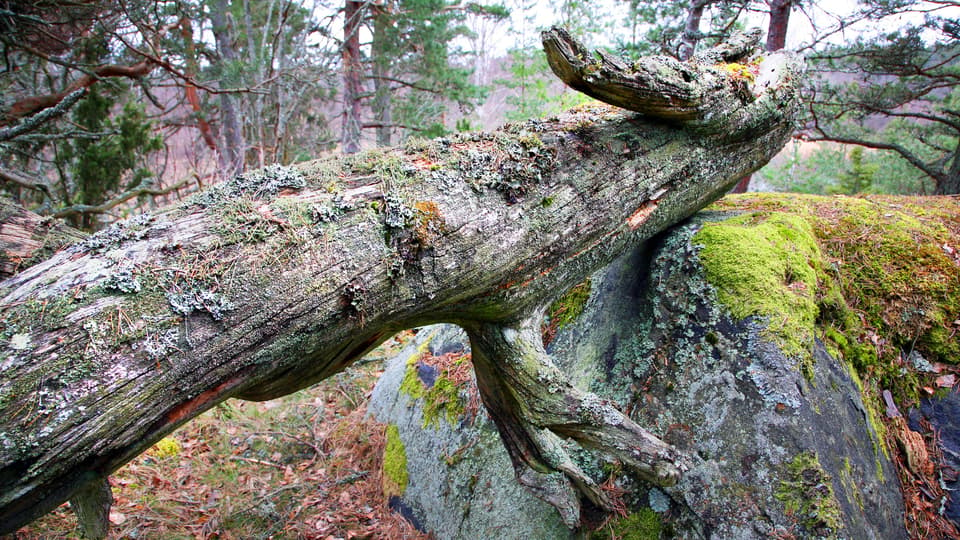
The recommendations are presented in the publication "Hur man identifierar urskogslika skogar i norra Europa: råd från vetenskapen" (in swedish). It compiles current research on the ecology, structure and natural processes of boreal and hemiboreal forests in Northern Europe. The aim is to provide support for how the European Commission's guidelines for old-growth forests should be used in the region.
The publication is written by a group of leading researchers from Sweden, Finland and the Baltic States. One of the researchers behind the work is Bengt Gunnar Jonsson, professor of biology at Mid Sweden University. He warns of the consequences if countries choose too restrictive or unscientific interpretations of the guidelines.
"With this work, we want to warn that weak or unscientific national interpretations of the EU's guidelines risk excluding many old-growth forest-like forests from protection. Then we risk both violating several EU policies and regulations and losing forests of great importance for biodiversity," he says.
A key conclusion of the report is that old-growth forests should not be considered as static environments but as dynamic ecosystems that are constantly changing through natural disturbances such as storms, fires and insect infestations. Therefore, the identification of old-growth forests should be based on indicators that reflect these natural processes, rather than on simplified criteria developed mainly for managed forests.
According to the European Commission's guidelines, a forest area must meet three main indicators and at least two supplementary indicators in order to be classified as primeval forest. The research group recommends that forests are dominated by native tree species, contain a significant proportion of dead wood and have an occurrence of old or very large trees. At the same time, it is emphasized that it is the presence of such structures that is decisive, not general averages for the entire stand.
Researchers are particularly critical of the use of fixed limit values for the amount of dead wood or the average age of trees, for example.
"Setting too strict limit values such as high volumes of dead wood or high average age of the trees in a stand risks excluding many old-growth forests. If the existence of old-growth forests is underestimated, it can lead to significant losses of biodiversity, increased future costs for restoration and difficulties in achieving both national and international environmental goals," says Bengt Gunnar Jonsson.
The report also highlights indicators such as natural regeneration, structural complexity, the presence of so-called habitat trees and various indicator species linked to forests with long ecological continuity. However, the researchers emphasize that the absence of certain species does not automatically mean that a forest lacks primeval forest values.
The new publication is intended to serve as a scientific support for authorities and decision-makers as the work to identify and protect Europe's remaining primeval forests continues.
Contact person:
Bengt Gunnar Jonsson, professor of biology at Mid Sweden University, bengt-gunnar.jonsson@miun.se
Contact
