It's not the conflicts – but the reactions that have changed in Eurovision
The Eurovision Song Contest is a celebration of music and community, but participating countries have often been in conflict throughout history. Research shows that what is new is not the conflicts – but how visible they have become and how the audience reacts.
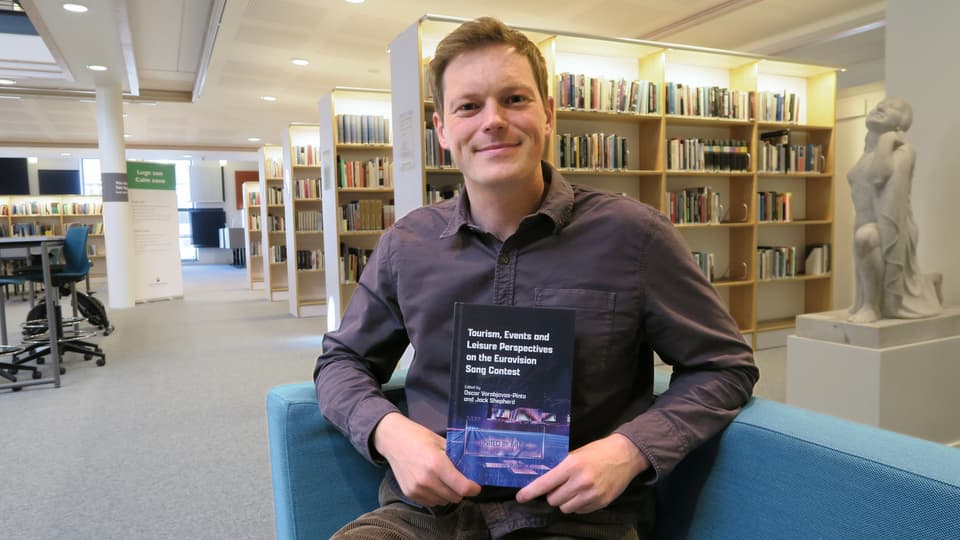
In connection with this year's Eurovision, the book Tourism, Events and Leisure: Perspectives on the Eurovision Song Contest will be released, in which researchers from eight countries analyse the competition from a tourism, event and leisure perspective. The book is the first of its kind to study Eurovision from these perspectives.
One of the researchers behind the book is Jack Shepherd at the tourism research center ETOUR at Mid Sweden University. He has studied Eurovision for a long time in relation to peace and conflict. In light of the extensive media coverage around Israel's participation since 2023 and Russia's exclusion in 2022, he believes that it may surprise many that conflicts are nothing new in the context of Eurovision, but that they have always been present in the competition.
"Countries that have participated in Eurovision have often been at war throughout history. It is not the conflicts themselves that make today's Eurovision unique, but the growing pressure for boycotts and exclusion from the audience, in social media and through political movements," says Jack Shepherd, researcher in tourism studies at ETOUR, Mid Sweden University.
The pressure for boycotts and expulsion is described in the book as a relatively new phenomenon. The researchers show how major cultural events such as Eurovision are increasingly used as arenas for expressions of opinion, political stances and, to some extent, even one's own identity
The impact of conflicts on voting has also become clearer over time. The book analyses how contemporary crises affect voting patterns and the relationship between jury and viewer votes.
"Despite the fact that the focus is often on the TV broadcast, Eurovision should be understood as a broader social phenomenon. The competition is the world's largest non-sporting event and the impact on culture, tourism and society is significant," says Jack Shepherd.
The book is highly interdisciplinary and the participating researchers and authors come from fields such as business administration, musicology, geography, political science, sociology and drama.
"Our research broadens the image of Eurovision and shows how a music program can also function as a mirror of the present, where global conflicts, identity and public opinion take place on a stage that reaches far beyond Europe's borders," says Jack Shepherd.
Contact information:
Jack Shepherd, Researcher in Tourism Studies at ETOUR, Mid Sweden University, 010-142 88 96, jack.shepherd@miun.se
Contact
