Student won first prize for solution tackling digital exclusion
Emma Hugod, a student in the Information systems development programme, has won first prize in AB Jämtland’s innovation competition. Her AI-powered tool, EquaView, developed as part of her studies, aims to make websites more accessible for people with visual impairments.
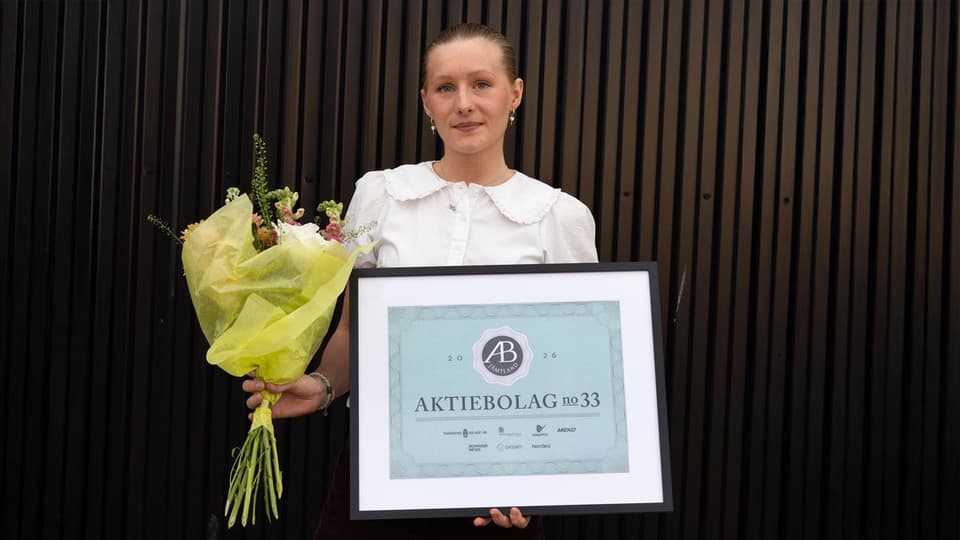
The award includes SEK 50,000 in share capital and is presented to innovative ideas with strong potential to create societal value. The jury particularly highlighted how EquaView addresses one of today’s major yet often overlooked social challenges: digital exclusion.
“I’m incredibly proud. It means a lot that others also recognize the lack of accessibility as an important issue and want to help address it. Receiving this award feels like the starting point for making a real difference”, says Emma Hugod.
Personal experience became the driving force
The idea grew out of Emma’s own experiences. Having grown up alongside a visually impaired cousin, she witnessed firsthand the barriers he faces in everyday life.
“He is one of the most positive people I know, but I’ve also seen how difficult it can be to use websites and digital services that are not designed for people with visual impairments. When I started university, I thought there had to be a way to solve this.”
Together with a fellow student, she developed an AI-based tool that analyses websites and adapts their structure to work more effectively with screen readers and other assistive technologies.
“The idea is for it to work somewhat like Google Translate. Users can choose to activate the tool, which then reorganizes information to make it more logical and easier to navigate. Images, buttons, and other elements are given clear, context-aware descriptions,” explains Emma Hugod.
The tool is also designed to reduce the cognitive burden caused by cookie banners, pop-ups, and other disruptive elements that interrupt screen-reader navigation.
From thesis project to business venture
The development of EquaView began as part of Emma’s studies at Mid Sweden University.
“The programme and my education have meant everything. I don’t think I would have arrived at this solution otherwise. My studies gave me both the knowledge and the time to develop the idea.”
The project was carried out as part of her thesis.
“That’s where I learned how to identify a problem, analyse it, and develop a solution. We followed the entire development process, from concept to working prototype. Before starting the programme, I wasn’t particularly interested in programming, but here I learned how to build solutions that actually work.”
Today, EquaView is being tested with users who have visual impairments, while interest from potential customers continues to grow.
“There are already companies that have said they want to become customers once the service is ready,” says Emma Hugod.
“A programme that encourages creativity”
For anyone considering a career in systems development, Emma has clear advice:
“It’s an excellent programme for anyone interested in using technology to solve problems. It offers tremendous opportunities for creativity while maintaining a strong connection to industry and the workplace.”
She describes interactions with companies and industry professionals as one of the programme’s greatest strengths.
“We meet many companies and professionals working in the field. It provides valuable insight into the opportunities available after graduation and the wide range of roles you can pursue. If you’re looking for a programme with strong industry engagement and real-world relevance, this is the right choice.”
Contact
