AI and sensors will provide patients with faster and more reliable diagnoses
Can AI help doctors detect diseases earlier and make safer decisions? In a new Swedish-Norwegian research project, data from multiple medical sensors will be combined to provide a clearer picture of a patient’s health. The aim is to develop the next generation of heart and brain monitoring.
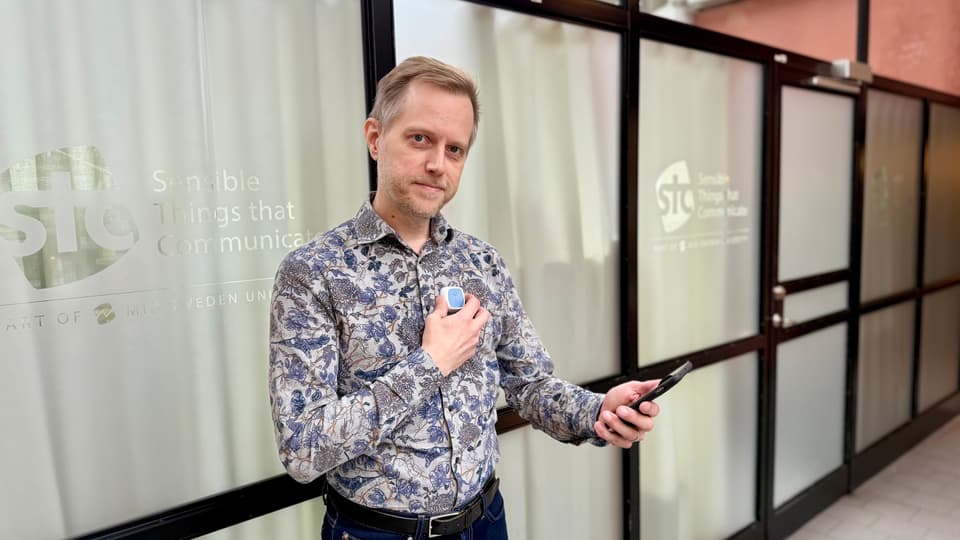
- We know that heart and brain diseases are among the greatest threats to public health. That is the starting point for our project. To detect diseases earlier and make more accurate diagnoses, better methods are needed to collect and interpret information about patients’ health, says Jan Lundgren, Professor at the STC Research Centre at Mid Sweden University.
Researchers in Sweden and Norway will therefore investigate how information from multiple sensors can be combined to provide healthcare professionals with better decision support. The new research project FUSMON, which brings together AI, sensor fusion and medical expertise, aims to pave the way for the next generation of heart and brain monitoring.
In the three-year project, researchers from Mid Sweden University and the Norwegian University of Science and Technology (NTNU) are collaborating with medical technology companies Coala Solutions and CATE Medical Devices. The aim is to investigate how data from multiple sensors can be combined and analysed using AI.
The technology is known as sensor fusion and involves combining information from multiple measurement sources to create a more comprehensive picture of a patient’s condition.
- In this project, we combine Mid Sweden University’s expertise in AI and signal analysis with the companies’ experience in medical technology and NTNU’s medical and technical expertise. This gives us the opportunity to investigate how different physiological signals can work together to create better decision support for healthcare, says Jan Lundgren.
From heart sounds to brain activity
The collaboration between academia and industry is a central part of the project. Mid Sweden University and Coala Solutions have previously conducted joint research on heart sounds. Within FUSMON, they will investigate how heart sounds and ECG can be combined with AI to develop the heart monitoring of the future.
NTNU contributes expertise in medicine, signal processing and brain monitoring. Together with CATE Medical Devices, the researchers will further develop and evaluate technology that combines NIRS and EEG to monitor the brain’s oxygenation and activity.
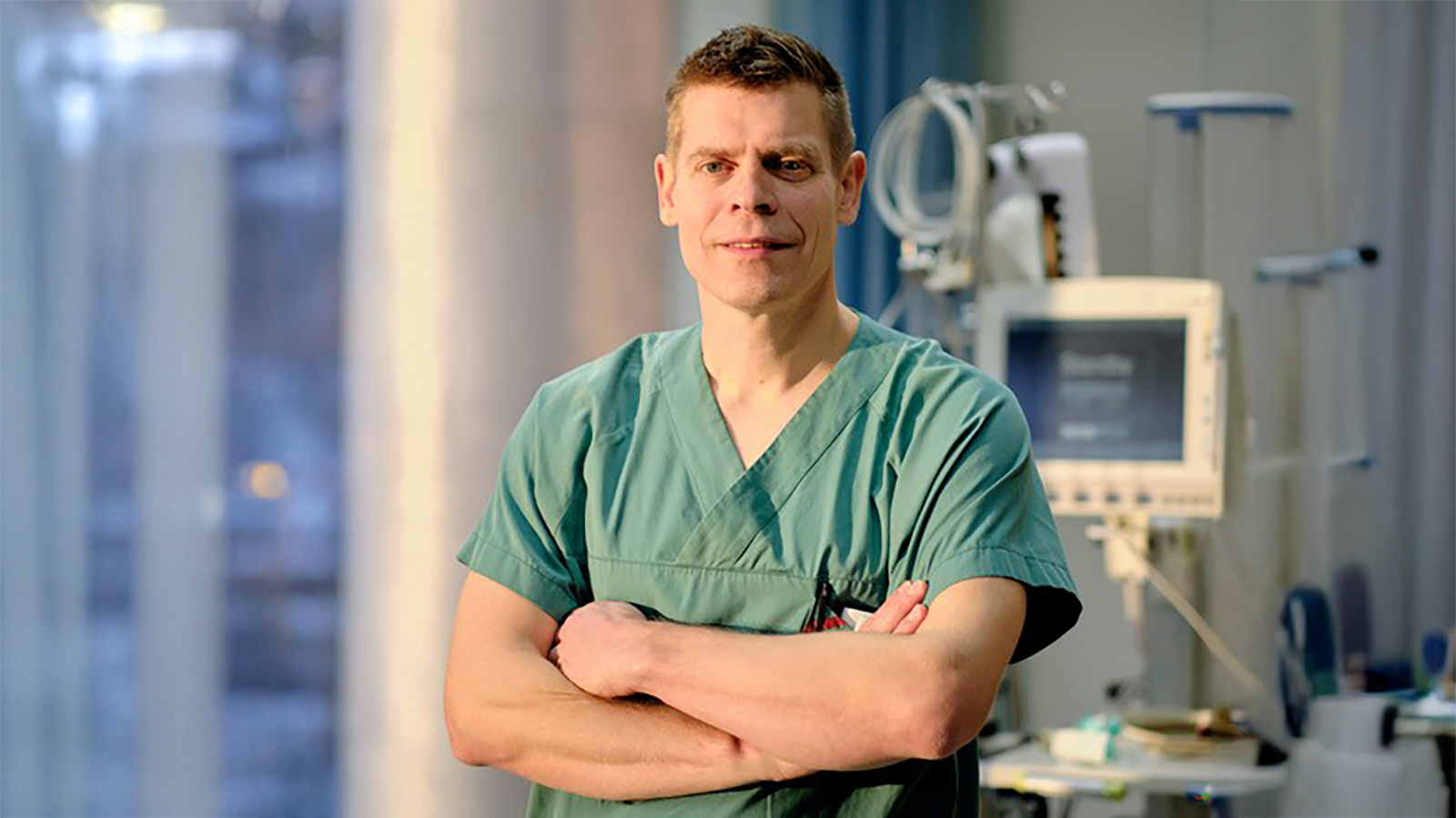
Nils Kristian Skjærvold, anaesthesiologist and researcher at NTNU.
- As doctors, we often need to interpret many different types of information to assess a patient’s condition. By combining medical knowledge with new sensor technology and AI, we can investigate whether it is possible to create a better and more comprehensive basis for decision-making, says Nils Kristian Skjærvold, anaesthesiologist and researcher at NTNU.
Where the heart and brain meet
A particular strength of the project is that research into the heart and brain is not conducted in separate tracks. Instead, the work is based on so-called cross-learning, where experience and methods from the two fields are used to advance one another.
- We want to see what happens when knowledge from heart and brain monitoring comes together. If methods that work in one field can also be applied to the other, this could open up new possibilities for how complex physiological signals are analysed, says Jan Lundgren.
Could contribute to more accessible healthcare
In the long term, the researchers hope that the results will contribute to more accurate diagnoses, better decision support and more efficient health monitoring. The technology could also create new opportunities for remote monitoring, for example in the home, which could make healthcare more accessible and equitable.
FUSMON is funded by Interreg Sweden-Norway and will run for three years. The project is carried out by Mid Sweden University and NTNU in collaboration with the companies Coala Solutions and CATE Medical Devices.
Contacts:
Jan Lundgren, project manager and professor at STC Research Center at Mid Sweden University, jan.lundgren@miun.se, +46 10 142 85 56 or +46 72 581 61 56
Nils Kristian Skjærvold, anaesthesiologist and researcher at the Norwegian University of Science and Technology (NTNU), nils.k.skjervold@ntnu.no, +47 99 37 57 74
Contact
