Sofia Thunberg: AI won't take your job – but maybe change it
From robot cats in elderly care to generative AI. Researcher Sofia Thunberg has for many years followed how new technology affects people and society. On December 3, she will come to the employer mingle in Östersund, to talk about AI and the opportunities of the future. Sign up today!!
Sofia Thunberg has a PhD in cognitive science and conducts research on the interaction between humans and new technology, with a particular focus on AI and social robots. After research at Chalmers and Uppsala University, she has become a sought-after lecturer who helps organizations understand both the opportunities and challenges of the rapid development of technology.
"Many people wonder if AI will take all our jobs. My short answer is no," says Sofia Thunberg.
During the Employer Mingle in Östersund on 3 December, she takes the audience on a journey through the history and development of AI. She gives examples from different industries and discusses how technology is already changing working life. The lecture is in Swedish.
Read more about the Employer Mingle and sign up
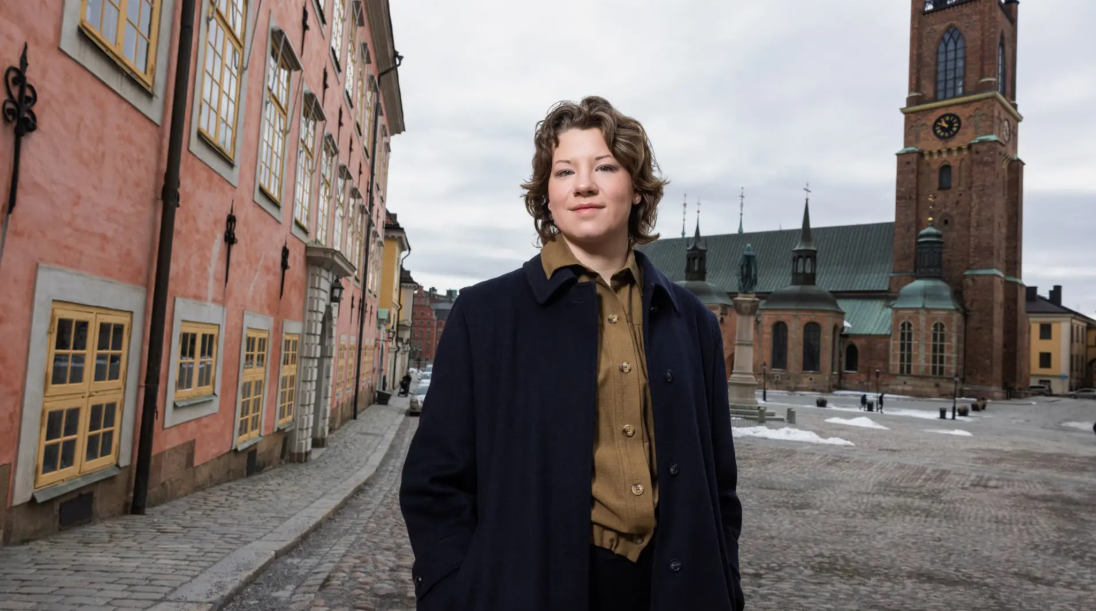 Sofia Thunberg, PhD in cognitive science and postdoc at Uppsala University.
From robot cats to generative AI
A large part of Sofia's research has been about social robots and how humans are affected by technology that can interact with us in a human way.
Among other things, she has studied robot cats and robot dogs that are used in elderly care for people with dementia, as well as robots that help children with autism feel safe during dental care visits.
"What fascinates me is that people can create such strong relationships with technology. We see that a robot cat or dog can contribute to security, calm and joy, even though the users know that it is not a real animal," says Sofia Thunberg.
Her interest in AI was sparked early on through studies of how new technology affects human behaviour and society. When she later came into contact with robotics research, the combination of technology, psychology and human behaviour became an obvious research focus.
Opportunities and risks go hand in hand
When generative AI broke through to a wide audience in 2022, the debate was largely characterized by the possibilities of the technology. Today, Sofia notices that questions about risks, ethics and sustainability are gaining more and more space.
"There is an increased awareness that AI is not only a new tool, but also something that can have consequences for society. Many people want to know how the technology affects the climate, how to use it in an ethical way and how to protect information and data," she says.
She also highlights the risk that AI systems reproduce and reinforce existing norms and prejudices if they are trained on historical data.
"If we are not aware of how the systems work, there is a risk that they reinforce discriminatory patterns instead of counteracting them.
Start by testing
For those who feel insecure about AI, Sofia has a simple piece of advice.
"Try it. Many people who are initially sceptical discover that technology can actually help them in their everyday lives once they have tried. Knowledge gives control, and control often reduces anxiety.
At the same time, she emphasizes that AI should not be used uncritically.
"See it as a conversation partner or a help to move forward in the thought process. But when it comes to new areas, you always need to fact-check and use your own judgement.
A technology that raises big questions
A recurring question during Sofia's lectures is about the future scenarios that are often painted in popular culture – will AI become independent and surpass human intelligence?
"So far, there is no general artificial intelligence that can act independently in this way. But there are strong forces that would like us to believe that this development is near," she says.
Instead, she believes that the most interesting questions right now are about how we choose to use technology and what consequences it has for people, working life and society.
During the employer mingle, students will have the opportunity to take part in both the latest research and concrete examples of how AI is already affecting the future of work.
"We are only at the beginning of understanding the effects this technology will have. This makes it extra important to be curious, ask questions and gain knowledge," says Sofia Thunberg.
About Sofia Thunberg
- Lecturer at Mid Sweden University's Employer Mingle in Östersund on 3 December.
- Doctor of Cognitive Science
- Researching human-computer interaction
- Specializing in AI, social robots, and the impact of technology on humans
- Has conducted research at Linköping University, Chalmers University of Technology and Uppsala University
- Lectures on AI's opportunities, risks and future impact on the labour market
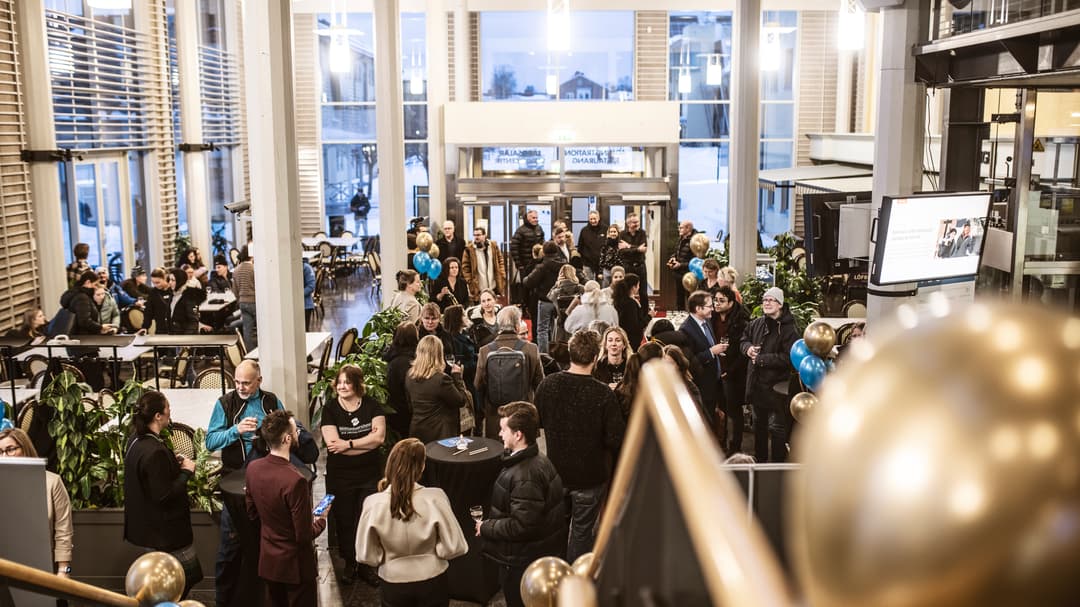
Anmäl dig till Arbetsgivarminglet
On December 3, it is once again time for Meeting Place Campus Employer Mingle in Östersund. The afternoon starts with an inspiring lecture on AI...