Kris som drivkraft – Möt James Kendra
Hur kan kriser bli katalysatorer för förändring och innovation? Professor James Kendra, meddirektör vid Disaster Research Center, delar sina insikter om improvisation, nätverk och varför framtidens krishantering kräver globalt samarbete.
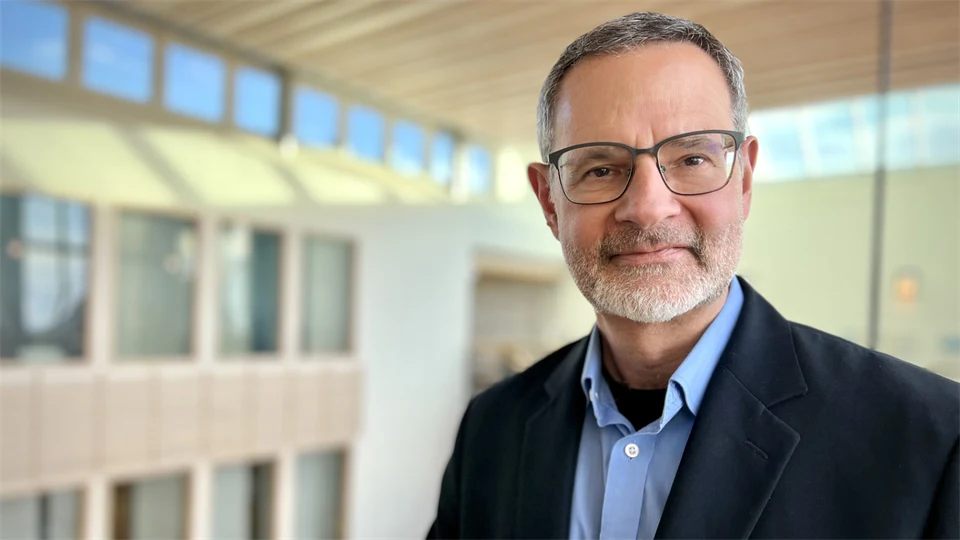
Under hösten besökte James Kendra vårt forskningscenter i Östersund. Vi bad honom berätta om sin bakgrund och forskningsområden.
I’m co-director, with Tricia Wachtendorf, of the Disaster Research Center at the University of Delaware in the US, and I’m a professor in the Biden School of Public Policy and Administration. DRC is the oldest center in the world devoted to the social science and management aspect of disasters, founded in 1963. We just celebrated our 60th anniversary last year. DRC is interdisciplinary, and our faculty represent areas of sociology, engineering, anthropology, geography, environmental policy, and public health. We also house the E.L. Quarantelli Resource Collection, named after one of DRC’s founders, which is a large specialized collection of rare or hard-to-find disaster-related books, government documents, consultant reports, research papers, and other materials. Our research covers a wide range of topics, from infrastructure failures, housing design and hazard mitigation initiatives, post-disaster recovery, humanitarian logistics, pets in disasters, evacuation behavior, and others. My own research has focused for many years on improvisation and creativity in disaster, volunteers and emergent groups in disaster response, and, more recently, household adaptations to infrastructure outages.
Under sitt besök i Östersund tillbringade James tid på RCR och träffade forskare vid Mittuniversitetet. Vad var syftet med besöket och vilka möjligheter ser han för framtida samarbeten?
This was a really rewarding visit to RCR and MIUN, and I’m grateful for the extremely warm welcome that I received. There are a lot of exciting things happening at MIUN in the areas of risk and crisis science. We had had a lot of contacts and visits between RCR and DRC in the years before COVID, so I wanted to meet with faculty and learn the latest about their research, and about crisis management in Sweden from a comparative perspective, as well as to look for points of intersection between interests of faculty at MIUN and ours at DRC. Plus, I was treated to three separate tours of the Crisis Simulation Lab, to see its multimedia, multisensory capabilities for research, training, and education. Many possibilities for future work together emerged, including in the areas of infrastructure adaptations, the role of civil society in disaster response, and interagency coordination in crisis response. The possibilities of the simulation lab are boundless. I could easily imagine both research and exercises that might involve a simulated Emergency Operations Center, or decision making and situation awareness involving an EOC and on-scene incident management activities.
Under besöket höll James ett seminarium som tog upp improvisation och organisatoriska svar vid kriser. Vilka huvudbudskap ville han lyfta?
The seminar drew from research by me and Tricia Wachtendorf that was published in our book American Dunkirk: The Waterborne Evacuation of Manhattan on 9/11. In that event, several hundred thousand people were evacuated in a spontaneous fleet of ferries, tugs, and other vessels. What we found was that even in large, outsized events—maybe especially in such events— improvised, unplanned activities are a vital component of the overall disaster response. Of course, that wasn’t the first event to show emergent behavior, which is notable in all large disasters. But we emphasized the idea that full coordination of resources is an unattainable goal in large community-wide disasters, and that much necessary work will occur in a kind of fragmented, organic way, as people build new networks and improvise with each other.
Hur ser James på framtiden för katastrofforskning och resiliensarbete i ett internationellt perspektiv?
Almost any concept of resilience would emphasize the importance of social institutions—and science is one sort of social institution. I think the future needs in research parallel those that we see in managing crises themselves. The need for networks and the deliberate fostering of social capital should be central to the scientific enterprise. Every expert anticipates shifts in the type and distribution of hazards. These shifts will demand both greater knowledge as well as efficiencies in sharing knowledge and transferring insights for application. There has to be a robust international dimension to these collaborations in order to facilitate learning. Just to take one example: what might be a new hazard in a particular place might be a familiar hazard elsewhere. And I would put special emphasis on interdisciplinary collaborations, including connections with the arts and humanities as ways of understanding crises.
I april är James en av huvudtalarna på Åre Risk Event, där årets tema är ”Between Hope and Despair – Crises as Enablers”. Vad betyder temat för honom och vad kan deltagarna förvänta sig?
It’s a provocative concept: the idea that crises can stimulate growth, rejuvenation, and beneficial change. Naturally, no one wants a crisis in order to provoke necessary or useful changes! But managing a crisis can involve new techniques, new ideas, and new networks, as well as mobilizing the creativity of people who might never have worked together before. If the positive effects of the creativity and flexibility that go with crisis management can be preserved, then it might be possible to build new and more resilient systems. It means, though, not seeing the end of the crisis as the “end” of crisis management. That’s the beginning of alertness for future crises.
Vill du veta mer om Åre Risk Event eller anmäla dig? Läs mer på vår webbplats och håll utkik efter biljettsläpp.