How data‑driven development can contribute to sustainable transition
Within the DIGIT project, over 60 business cases, in collaboration with Mid Sweden University, have worked with data-driven development and AI for increased sustainability. In a new report, three of the companies talk about their journeys – from challenge to concrete benefit.
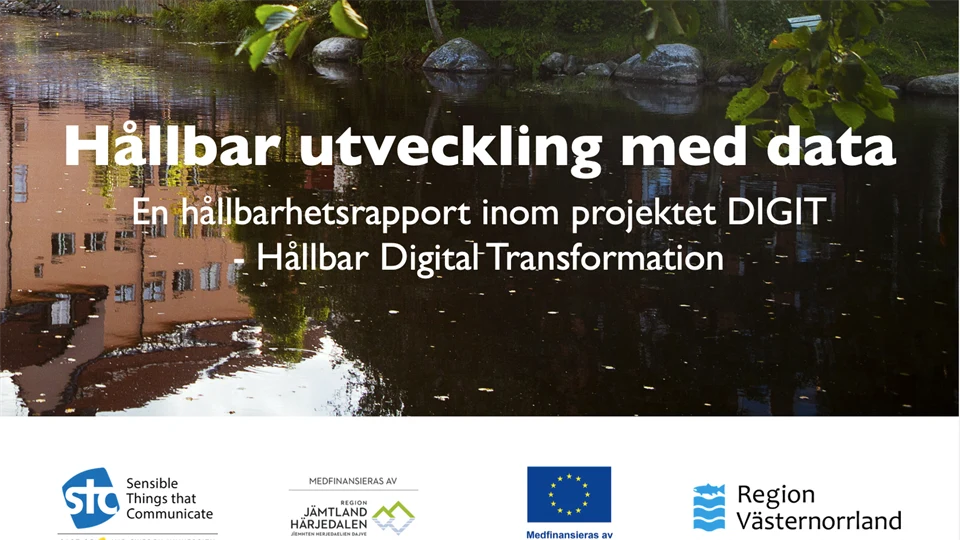
The EU project DIGIT, Sustainable Digital Transformation, aims to strengthen the competitiveness of companies in Jämtland and Västernorrland through AI and data-driven development.
After just over two and a half years, the project shows that sustainable digital transformation is about uniting technical expertise, research, people and organisations.
"The companies' commitment is crucial. DIGIT has given them the opportunity to test, learn and develop together with the research, and the results show that data-driven development can contribute to sustainability on several levels," says Mattias O'Nils, Centre Director for STC Research Centre.
The new report highlights three examples of how data-driven development can contribute to sustainability work in practice: Media Research, BlåGrön Odling and MittSverige Vatten och Avfall. The companies represent different industries, but have all used data and AI as tools to meet their respective sustainability challenges.
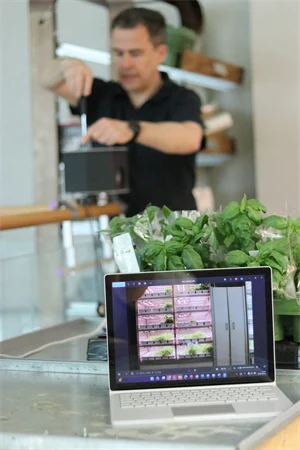
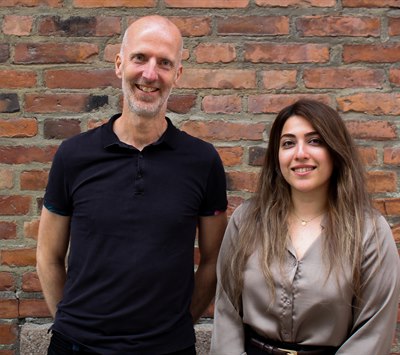
In the picture to the left, Mattias O'Nils is fixing the cultivation system for Blågrön Odling with his camera. To the right is Pär Segerström, CEO of the media and business intelligence company Media Research together with specialist and industrial doctoral student Faeze Zakaryapour.
For Härnösand-based Blågrön Odling, the work has been about developing smart cultivation systems in a store environment that reduce food waste and the need for transport. With support from the project, Media Research in Östersund has developed AI-based solutions that streamline the company's processes and make the business model more scalable and sustainable.
"We are a living example of how you can drive high-tech development in sparsely populated areas," says Pär Segerström, CEO of Media Research.
The third case in the report is about MittSverige Vatten och Avfall, where data-driven methods and sensor technology are used to improve the work with stormwater facilities.
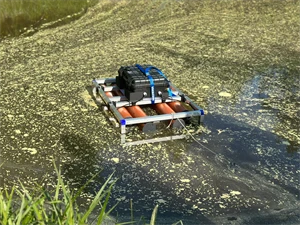
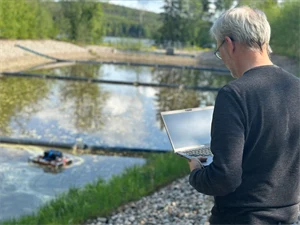
Rikard Hamrin, research engineer, controls the autonomous boat that helps MittSverige Vatten och Avfall measure sediment levels below the water surface.
The project has also strengthened Mid Sweden University's research in AI and data-driven development. Since the start of the project, 99 scientific articles have been published that have been classified according to the UN's Sustainable Development Goals. The majority of the publications are linked to the goals of sustainable industries and sustainable societies.
Read the Sustainability Report (in Swedish)
Learn more about the project DIGIT − Sustainable Digital Transformation