Fire‑mimicking methods as restoration tools in boreal pine forests
Fire has historically been vital to biodiversity in boreal forests, but fire frequency has dropped dramatically. This project evaluates whether fire-mimicking methods — stem-base burning and bark-stripping — can complement prescribed burning and support threatened habitats in boreal pine forests.
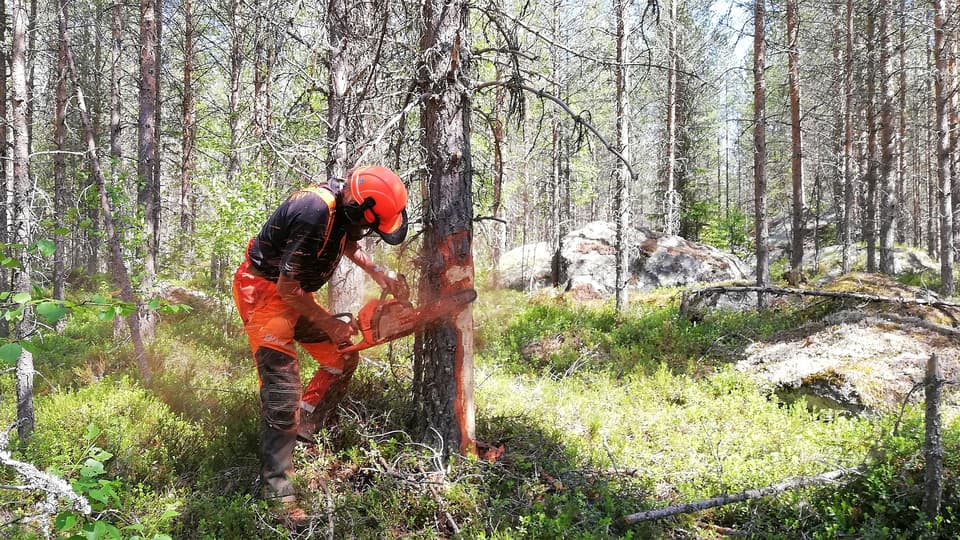
Fire has historically been a key natural disturbance in boreal forests, creating habitats vital for biodiversity. During the last 150 years, effective suppression and land-use change have drastically reduced fire frequency, leading to declines of fire-dependent species. To counteract these losses, prescribed burning has been widely applied in Sweden since the 1990s. Although effective, it is costly and cannot be used everywhere. This has recently prompted the development of complementary fire-mimicking methods at the tree level, aiming to create fire scars and resin-impregnated wood that develop into long-lived kelo pines – habitats of high conservation value.
The project will evaluate two such methods: stem-base burning, where small controlled fires are lit at the base of standing pines, and bark-stripping methods, including “katning,” girdling, and topping. Three central questions will be addressed: (1) Does landscape context influence colonisation by fire-dependent beetles on stem-base burned pines? (2) Does seasonal timing of burns affect resin flow and kelo formation? (3) Which bark-stripping methods are most efficient in producing resin-rich wood?
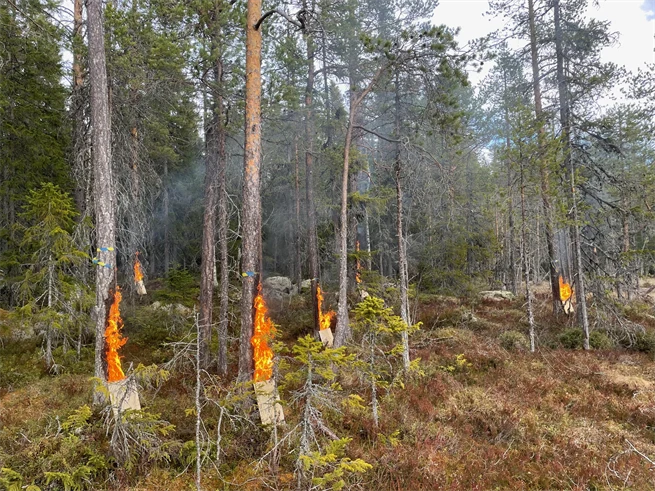
Veteranisation in pine forests.
The work is organised in three packages. A large-scale field study (25–30 sites across Sweden) will assess beetle colonisation on stem-base burned pines in relation to local and landscape conditions. A replicated experiment will compare early summer and winter burns, with detailed analysis of resin chemistry and distribution. Finally, a unique long-term bark-stripping experiment will be evaluated for efficiency in producing resin rich wood.
By combining ecological experiments with collaboration with authorities and forest companies, the project will deliver robust and practically relevant guidelines. The results will help the Swedish EPA, county boards, and companies apply “the right measure in the right place,” supporting fire-dependent biodiversity and habitats in boreal pine forests
Facts
Project period
260501—290430
Partners
- SCA
- Länsstyrelsen
Subjects
Research groups
Project leader

Project members
Funders