Visualisation for Safety and Accessibility
Visualisation for Safety and Accessibility explores whether safety in public space can be created without dividing people into the protected and the threatening. The project treats accessibility as part of safety and uses Gothenburg's digital twin as a lab to test ideas before they are built.
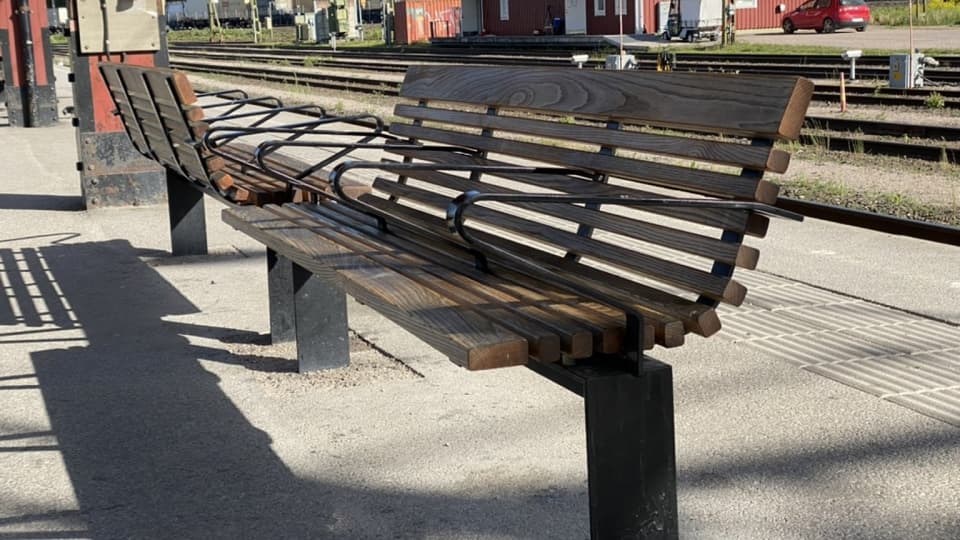
Safety-oriented design in the built environment rests on an unexamined premise: that safety is created by identifying and managing threats, which inherently requires categorising people as "worthy of protection" or "threatening." This logic produces measures that may create safety for some by excluding others. Meanwhile, accessibility and safety are rarely treated as interconnected dimensions, despite inaccessible environments being inherently unsafe for many people.
The project investigates three research questions: (1) How do safety discourse and policy documents create categorisations of people as "threatening" and "worthy of protection", and what consequences does this have for different groups' belonging in public space? (2) How can a digital twin make visible and evaluate safety from the perspectives of accessibility and universal design, where inaccessibility is understood as a safety deficit in itself? (3) How can safety-creating design be developed through nonclusive design, without excluding certain categories of people?
The project is conducted as co-creative action research in Gothenburg, using its digital twin as a lab environment. Four work packages develop lab tools for officials, discourse analysis of policy documents, methods for safety and accessibility, and a conceptual model for nonclusive safety-creating design. Five project partners participate: Mid Sweden University, City of Gothenburg, University of Gothenburg, Begripsam AB, and Lund Municipality.
Facts
Project period
260901—290831
Partners
- Göteborgs stad
- Göteborgs universitet
- Lunds kommun
- Begripsam AB
- Stockholms universitet
Subjects
Research groups
Project leader

Funders