Felicia Melanie
Felicia Melanie is a doctoral student in business administration and is affiliated with CER – the Centre for Research on Economic Relationships. Her dissertation work focuses on how different leadership styles affect engagement and collaboration between employees and employers.
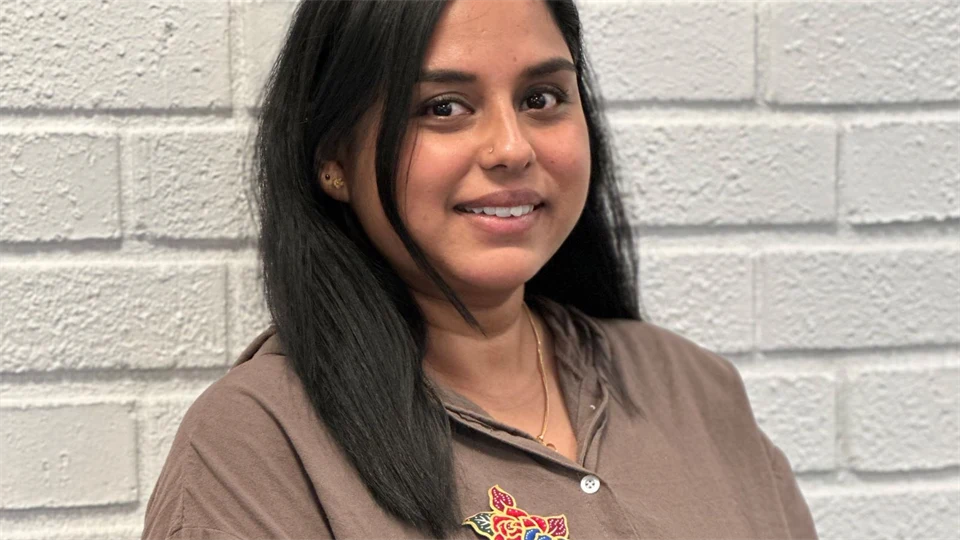
Tell us—who is Felicia?
I am from Singapore and have lived in Sweden for almost three years. Before moving here, I worked for several years in customer service, including at a bank in a fast-paced environment and at Gallup in Singapore, where I worked with customers as well as internal and external teams.
During my time in Sweden, I have also studied Swedish for Immigrants (SFI) and Swedish as a Second Language at the basic level. In 2024, I started my master’s programme in marketing and business administration at Mid Sweden University, and after that I began as a doctoral student in business administration at CER.
Briefly describe your research project.
My research project is about inclusive leadership in different cultural contexts, focusing on Singapore and Sweden. I study how leaders, employees, and organizations perceive and practise inclusion and compare similarities and differences between the two countries. By analysing these three perspectives, I want to identify strengths and challenges and understand why there is sometimes a gap between organizations’ intentions and employees’ actual experiences. The aim is also to explore how leaders, taking cultural differences into account, can work to help more people feel involved, respected, and included in the workplace.
How did you become interested in this area?
My interest in leadership emerged during my most recent job in Singapore, at Gallup—a strengths-based organization that really opened my eyes to the difference good leadership can make, both for the organization and for employees. I had never before felt so appreciated and empowered in my professional role, and the sense of safety and trust I was given meant I could contribute even more to the team. I truly loved my work and felt incredibly motivated.
Later, during my master’s programme, I focused on different types of leadership styles, which inspired me to deepen my understanding further, both theoretically and practically. So now I want to focus on inclusive leadership. Previous experience working in multicultural teams, and later my move to Sweden, also made the contrast between work cultures clear. This sparked my curiosity about how inclusive leadership works in different social and cultural contexts.
Why do you think this is needed?
I think inclusive leadership is needed because many organizations talk about diversity and inclusion, but employees do not always experience it in everyday life. So there is a kind of paradox between what is said and what people actually feel.
Everyone in the workplace—leaders, employees, and the organization as a whole—plays a role in creating an inclusive environment. If this is not achieved, it can affect engagement, motivation, and a sense of belonging. That’s why it is important to understand why the gap arises and how everyone can contribute to a good working environment.
How do you divide your time between research and teaching?
Since I am new as a doctoral student, I am still at the beginning of my research project and have not yet started teaching.
Dream job scenario?
In a dream scenario, I would like to continue working with issues related to leadership, inclusion, and working life. For example, I imagine a role where I can both delve deeper theoretically and stay close to practice, contributing to real change—preferably in a position where I can combine research, teaching, and collaboration with organizations.
Contact