LUSS – Quantifying Air Resistance in Seated Cross‑Country Skiers
How does air resistance affect performance in seated para cross-country skiing? A new study examines differences between various sitting positions to improve understanding of athletes’ conditions and contribute to fairer competitions and a more inclusive sport.
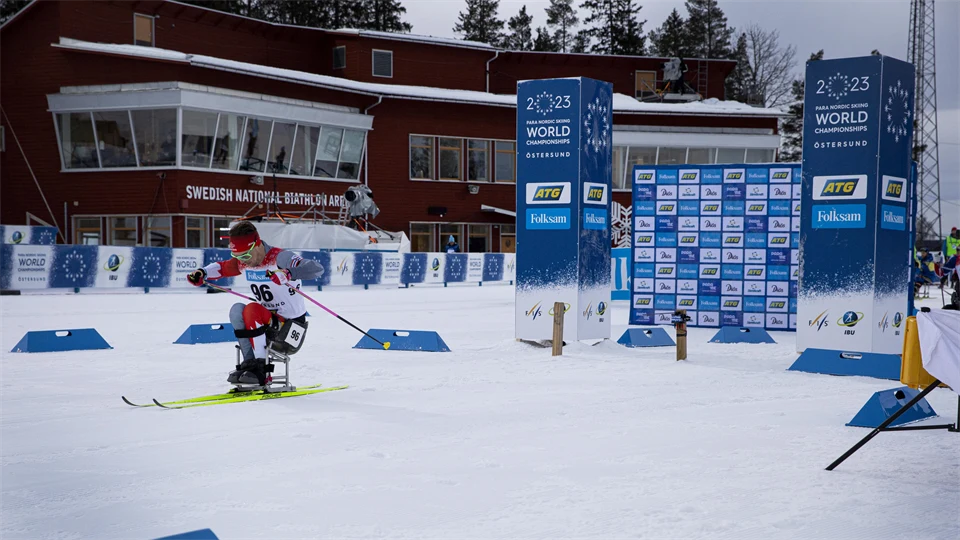
In para cross-country skiing, athletes with different impairments compete in three sport classes to ensure competitions are as fair as possible. These classes are sitting, standing, and visually impaired. Within the sitting class, where athletes compete using a so-called sit-ski, there are five different subclasses competing against each other, with results adjusted using a time factor that depends on the skier’s impairment. Depending on the degree of impairment, athletes use different sitting positions. Their ability to crouch and adopt a lower position on downhill sections, where poling is ineffective, also varies.
An important but previously unexplored factor for seated skiers is air resistance. Air resistance increases significantly with speed and is influenced by the skier’s shape and the surface area exposed to the air. Since sitting positions vary between classes, it is likely that air resistance does too. This study therefore investigates how air resistance differs among seated skiers and classes.
By increasing knowledge of these differences, we can better understand why certain classes have different conditions on the track. In the long term, the results may contribute to more accurate time factors and thus fairer competitions in para cross-country skiing. At the same time, the research strengthens social sustainability and knowledge of a sport that has long been relatively under-studied.
The study is expected to reinforce Mid Sweden University’s profile in parasport and sports technology, as well as contribute to Östersund’s role as a pioneer in promoting equal opportunities in sport. Through international collaborations, the project can increase visibility, foster inclusive sport, and ultimately lead to more research partnerships and external funding.
Facts
Project period
260101—270630
Research centers
Subjects
Municipal cooperation
Project leader

Project members

Funders